
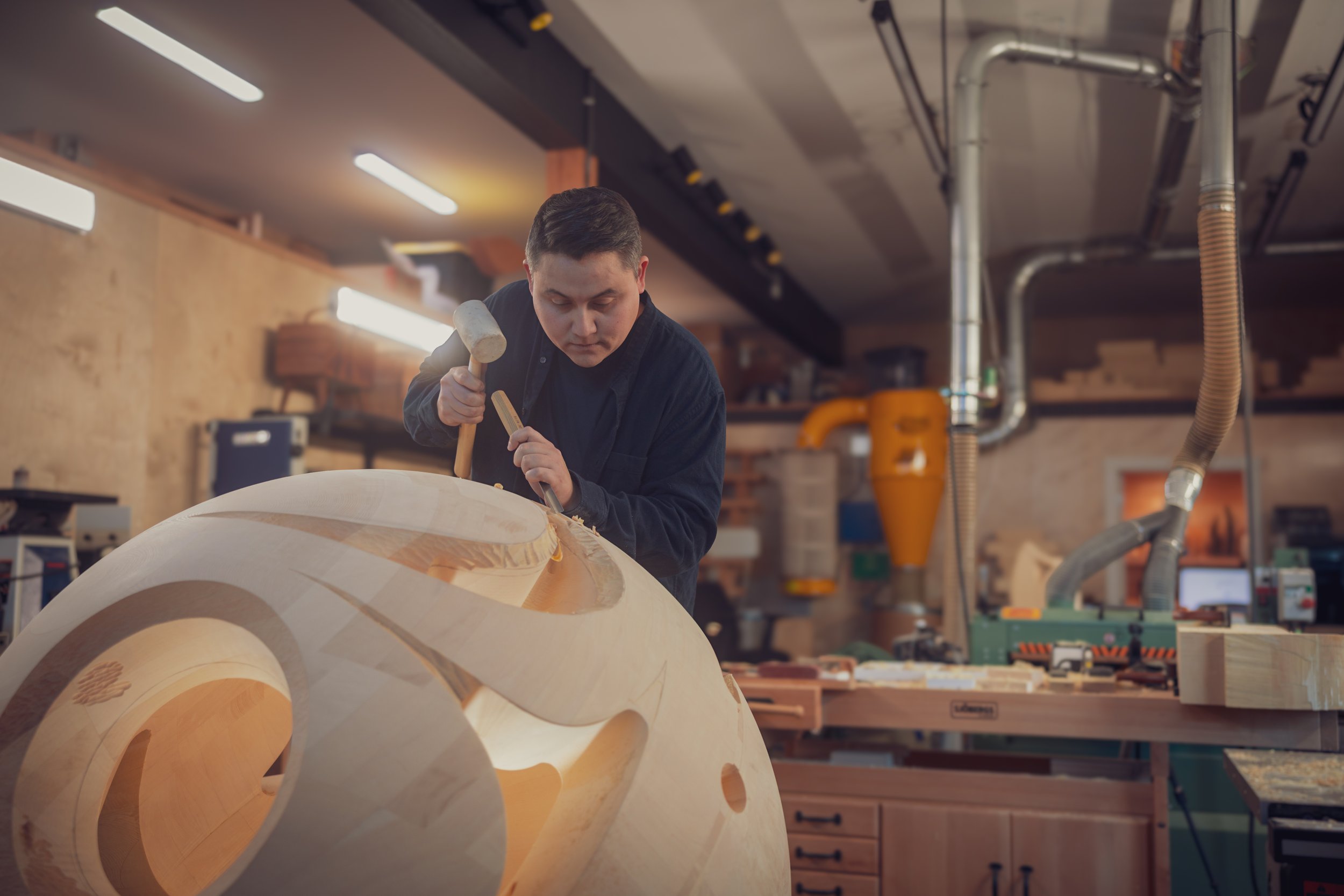
James Harry
As part of NOW-ID’s ongoing interview series, Ne Plus Ultra—which celebrates artists and designers whose work is both inspiring and impactful—we are delighted to share the insights and practice of contemporary Coast Salish artist James Harry.
Raised in a family of artists, James learned Salish design and carving from his father before earning his BFA from Emily Carr University of Art + Design. Today, he is an industry leader redefining the role of Indigenous art within public space, architecture, and cultural policy. Rooted in his Sḵwx̱wú7mesh and Namgis heritage, his monumental sculptures, digital works, and integrated installations bring together traditional Coast Salish design with future-facing aesthetics and technologies.
Through collaborations with cities, developers, architects, and institutions, James challenges colonial structures while creating space for Indigenous presence, perspective, and leadership within contemporary environments. His work offers a bold vision for Coast Salish art—one grounded in cultural sovereignty and ancestral knowledge, yet open to innovation and the possibilities of the future.
Your work is deeply rooted in your Coast Salish heritage while engaging contemporary audiences through painting, carving, public art, and architecture. How does your heritage shape your creative practice?
I don't see my heritage as something separate from my work—it is the foundation of how I think. As a Sḵwx̱wú7mesh artist, I was raised understanding that our relationship to the land is reciprocal. The mountains, rivers, forests, and coastline aren't simply landscapes; they're teachers that carry knowledge accumulated over thousands of years.
My work is an ongoing conversation with those teachings. Rather than treating Indigenous culture as something to preserve behind glass, I'm interested in how it continues to evolve and shape the future. For me, Coast Salish design isn't a visual style that gets applied to a building or sculpture. It's a way of understanding relationships—between people, place, material, and time.
There's a responsibility that comes with carrying that knowledge forward. My father dedicated much of his life to helping revitalize Coast Salish carving during a time when many of our traditions had been suppressed. My generation has a different responsibility: to expand that language into places it hasn't traditionally existed, whether that's architecture, public infrastructure, or city building. I'm interested in ensuring our culture continues to grow for the generations that come after us.
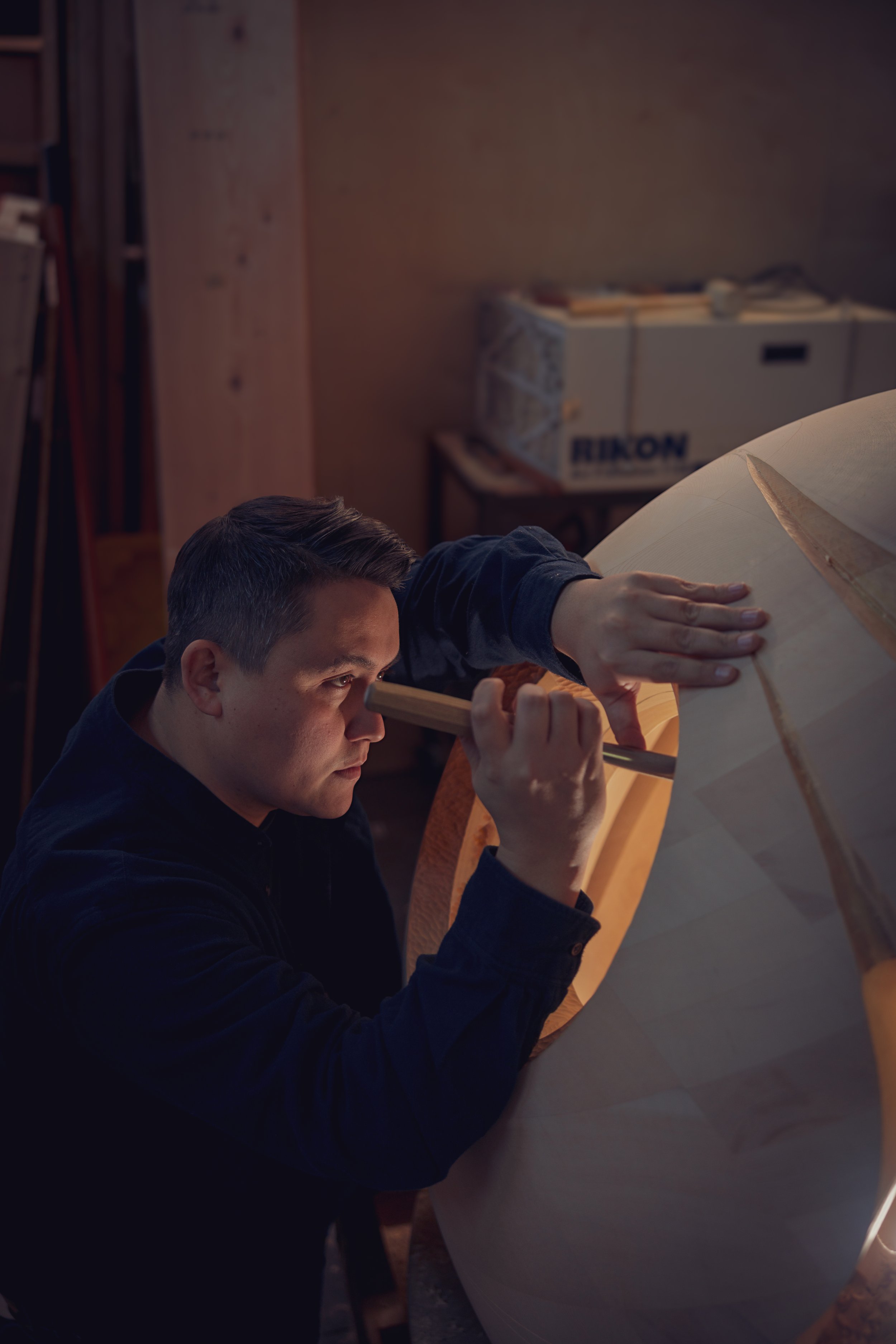
Eye Of The Ancestor - 2026 - James Harry
Could you tell us a little about your creative process? How does a new project typically begin?
Every project begins by listening.
Before I think about form or materials, I spend time understanding the place—its history, ecology, community, and cultural context. I believe that good design emerges from relationships rather than assumptions.
From there, I begin sketching and exploring geometry. Much of my work grows from simple Coast Salish forms such as circles, crescents, and trigons. These aren't decorative motifs; they're part of a deeper design language that reflects movement, balance, transformation, and connection. As the project develops, I move between hand drawing, carving, digital modelling, engineering, and fabrication, allowing each stage to inform the next.
Whether I'm creating a sculpture, collaborating on architecture, or designing a public space, I'm always asking the same question: how can this work feel as though it belongs here? When a project succeeds, it feels less like something imposed onto the landscape and more like something that has emerged from it.

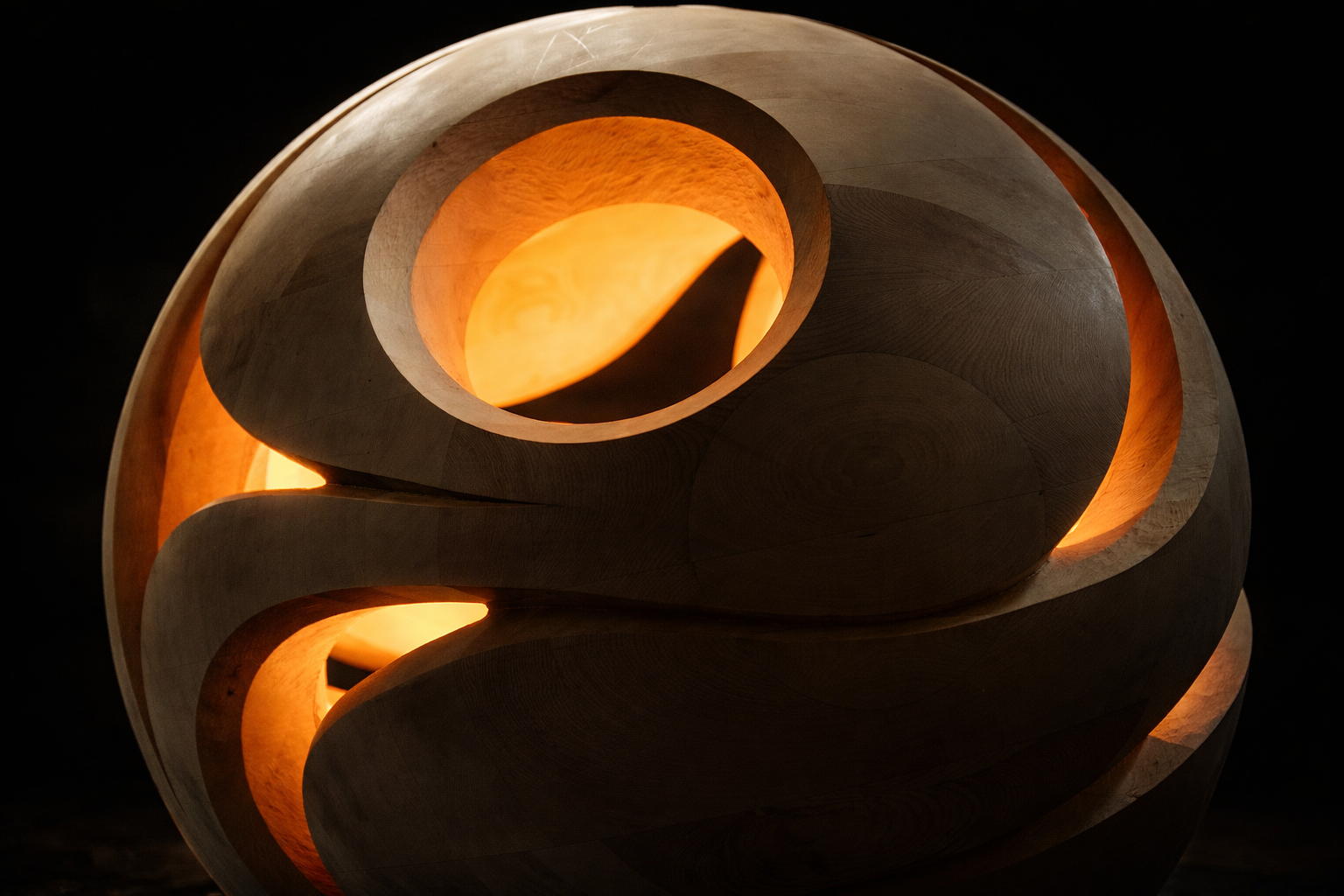
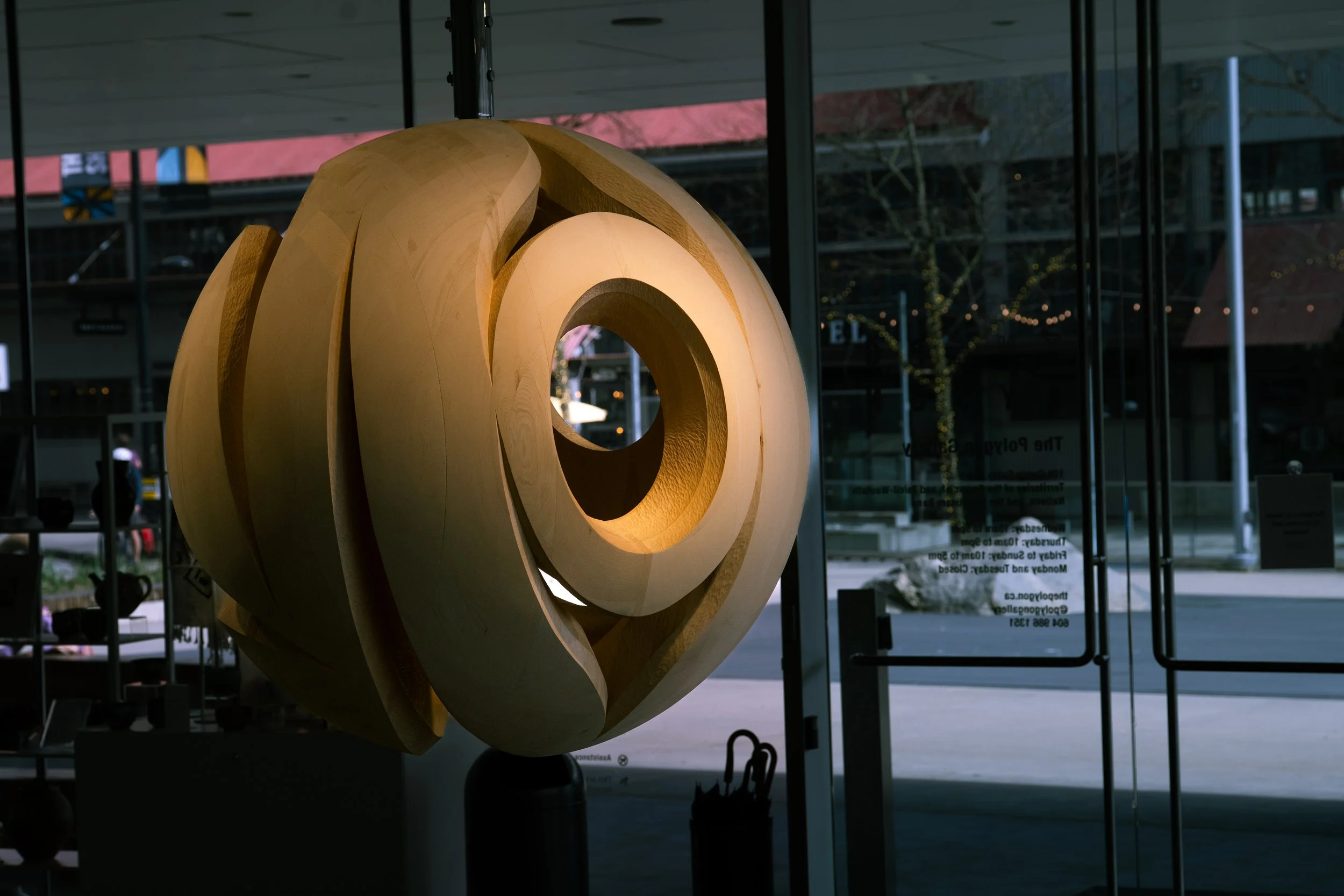
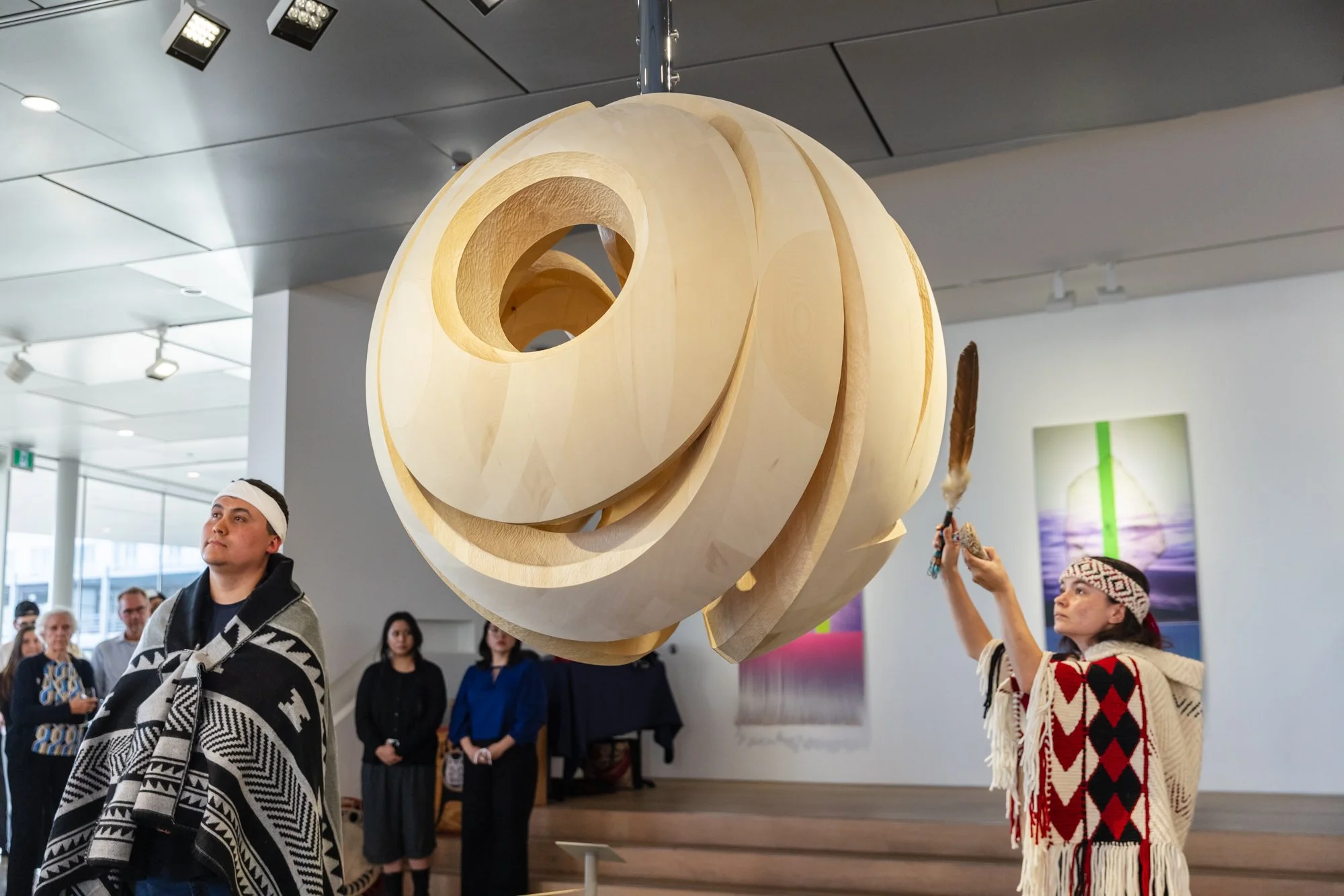
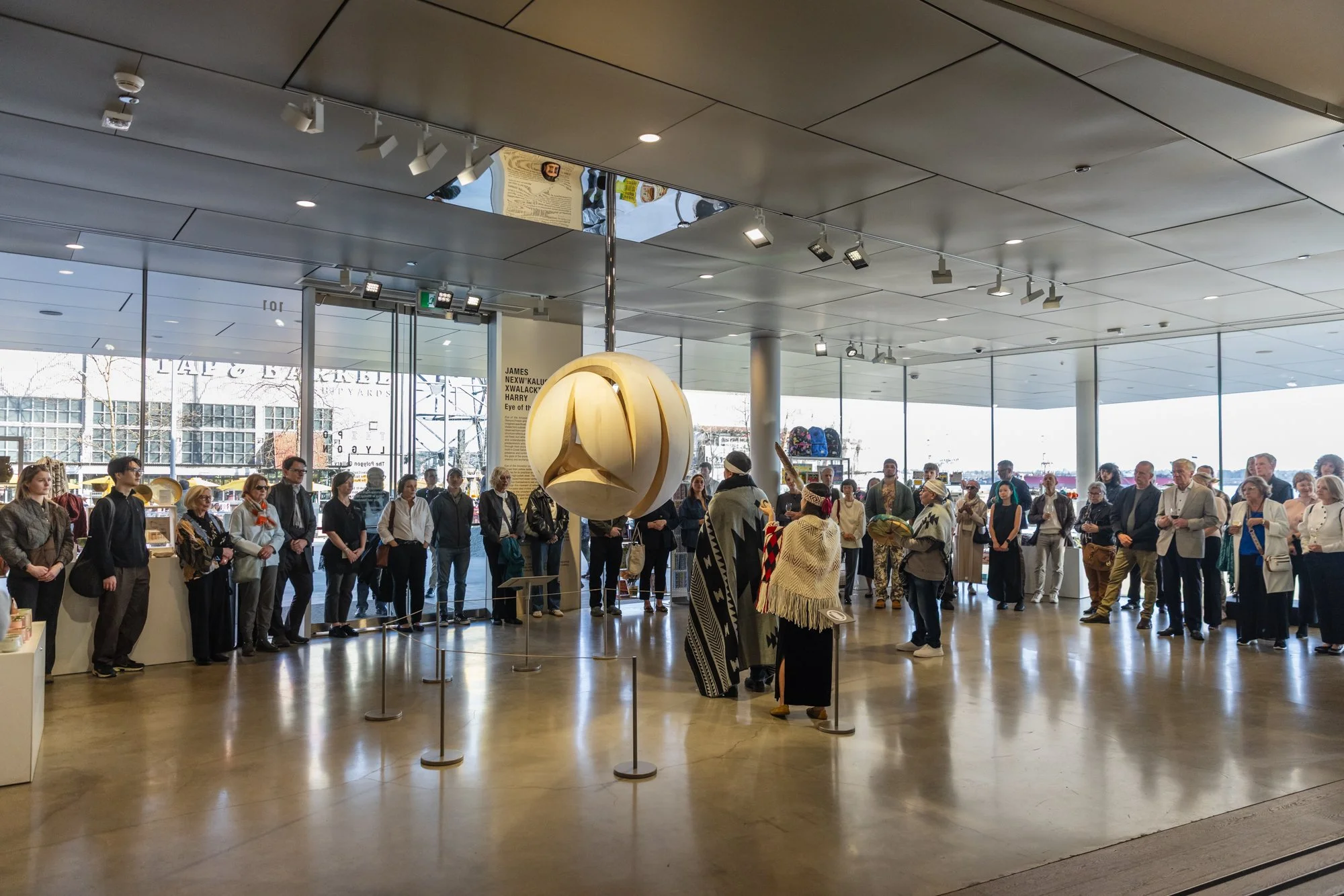
Eye of the Ancestor, 2026. James Harry. Commissioned by The Polygon Gallery and Burrard Arts Foundation. Photos by James Harry and Alison Boulier.
Many of your recent projects involve collaborations with architects, designers, cultural institutions, and communities. What have these collaborations taught you?
Collaboration has fundamentally changed my practice.
Historically, Indigenous artists have often been invited into projects near the end of the design process to create artwork for spaces that have already been defined. Increasingly, I've had opportunities to work alongside architects and landscape architects from the earliest stages of a project, where cultural thinking can influence the design itself rather than simply decorate it.
Those experiences have reinforced my belief that the strongest projects emerge when everyone is willing to learn from one another. Architects bring technical expertise. Engineers bring problem solving. Communities bring lived experience. Indigenous knowledge contributes a long-term understanding of place and relationship.
When those perspectives are genuinely integrated—not layered on afterward—the result feels more meaningful, more resilient, and more connected to the people who will ultimately live with it.
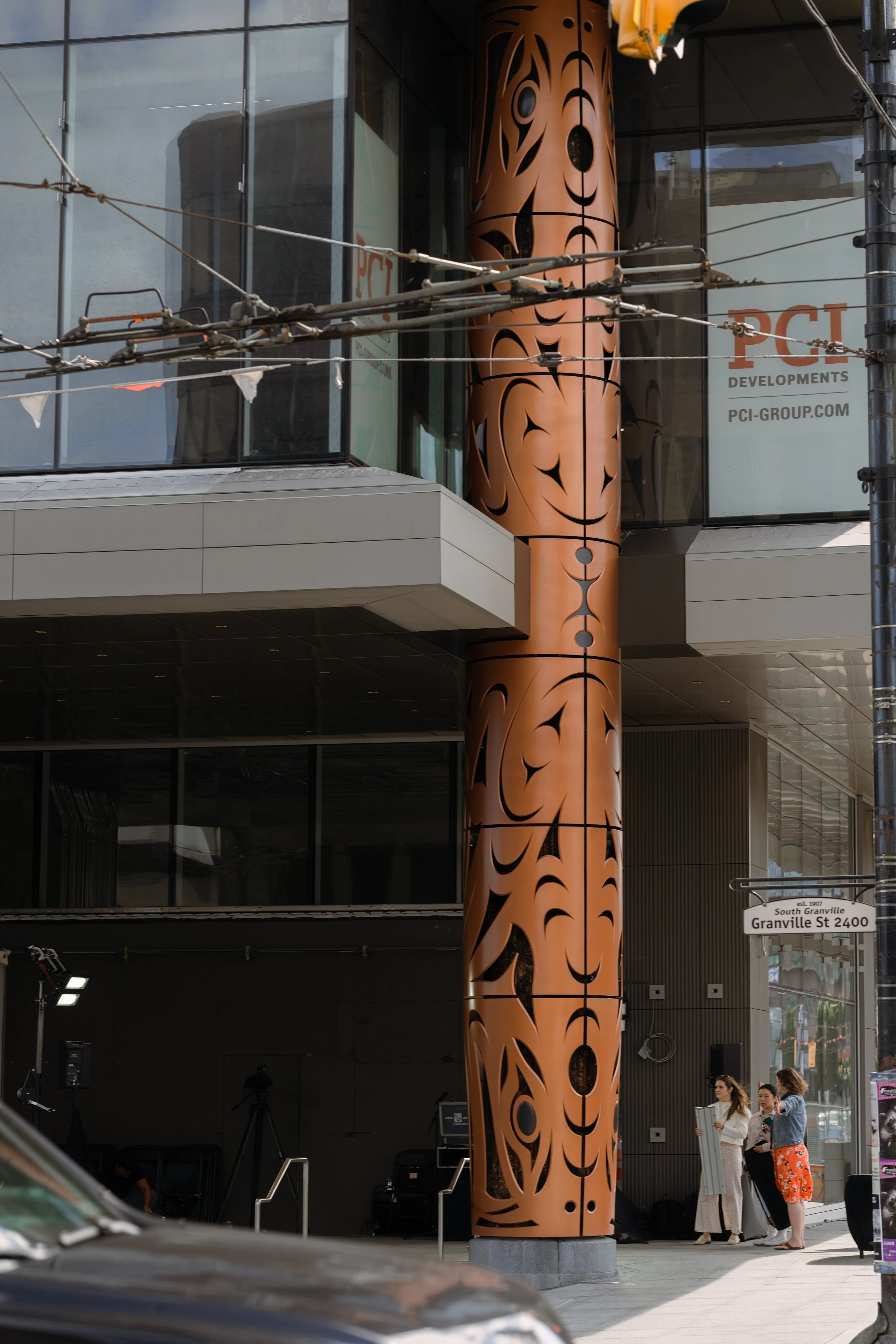
Sínulhḵay, 2025. James Harry and Lauren Brevner. Commissioned by PCI Developments. Photo by Black Rhino Creative
Place seems to play a central role in your work. From a Coast Salish perspective, what can Vancouver and the broader Pacific Northwest teach us about our relationship to land, history, and community?
The Pacific Northwest reminds us that we are not separate from the natural world—we are part of it.
For thousands of years, Coast Salish communities developed systems of knowledge by carefully observing this landscape. The forests, rivers, salmon, tides, and seasons all shaped how we lived, designed, and cared for one another. Those lessons remain incredibly relevant today.
As our cities continue to grow, I think we have an opportunity to move beyond seeing land as something to build upon and begin seeing it as something to collaborate with. Architecture can respond to ecological systems. Public spaces can strengthen cultural identity. Design can help people feel more connected to where they are.
I believe Indigenous knowledge has an important role to play in shaping that future—not because it's historical, but because it offers ways of thinking about sustainability, belonging, and long-term responsibility that are increasingly necessary in our rapidly changing world.
Finally, what continues to inspire and motivate you? Looking 25 years into the future, how do you hope your artistic journey will continue to unfold?
What inspires me most is possibility.
We're at a moment where Indigenous voices are beginning to be included in conversations about architecture, planning, and city building in ways that weren't possible a generation ago. I see tremendous potential to help shape that future.
Over the next twenty-five years, I hope my work continues to move beyond individual artworks and into larger systems—architecture, public infrastructure, landscapes, and civic spaces. My goal is to help establish Coast Salish design as a living design language that can inform how future generations experience the built environment.
Ultimately, I hope the next generation of Indigenous artists and designers won't have to argue for a seat at the table. Instead, Indigenous ways of understanding place will simply be recognized as an essential part of how we imagine and build our communities.
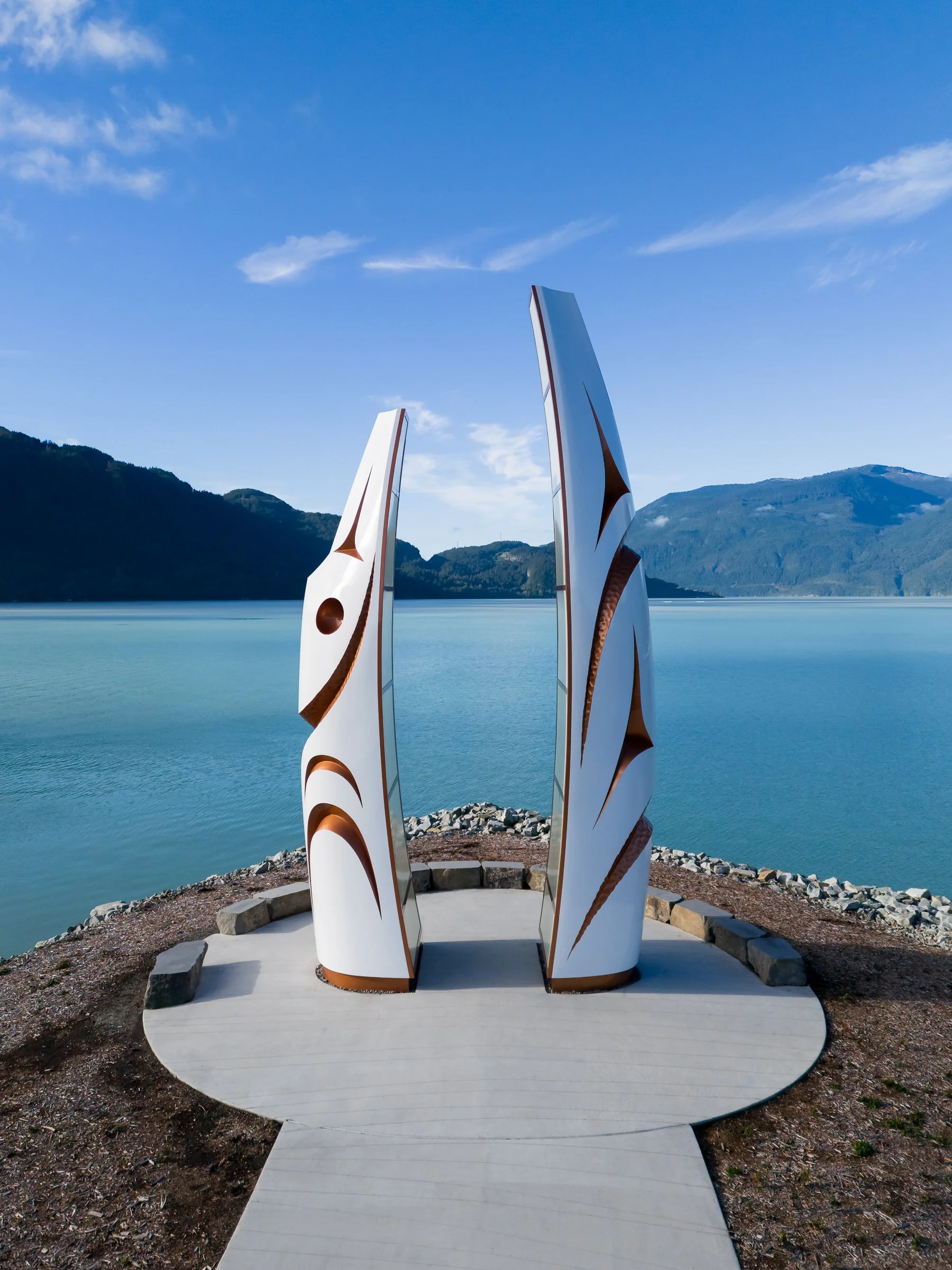
Welcome Gate, 2024. James Harry. Commissioned by Matthews West. Blaine Campbell Photography.