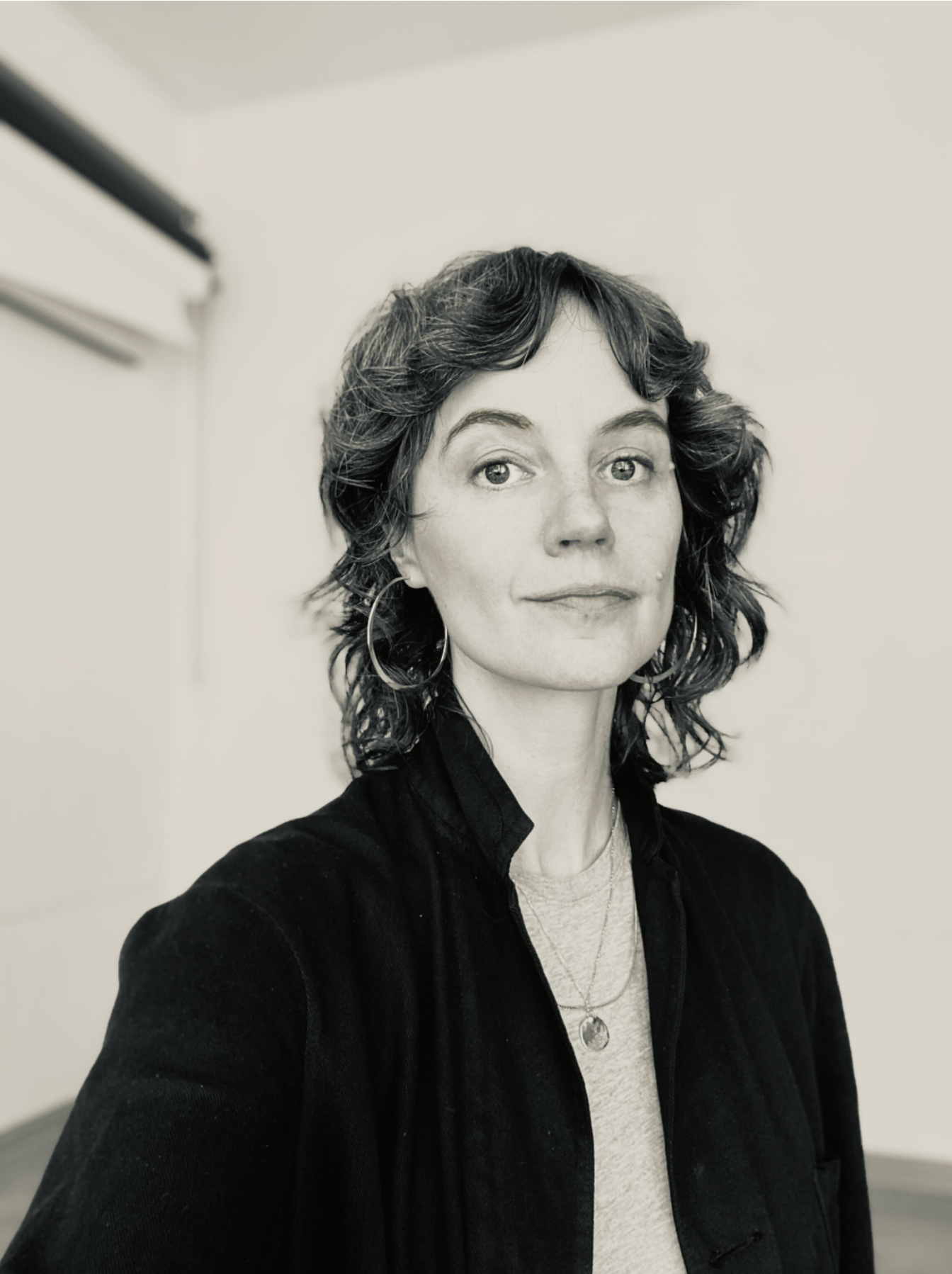
Laura Hart Newlon
As part of NOW-ID’s ongoing interview series, Ne Plus Ultra—which highlights artists and designers creating inspiring and impactful work—we are delighted to share the insights of Vancouver-based artist Laura Hart Newlon.
Laura is an Associate Professor at Emily Carr University of Art + Design, where she researches the complex intersections of materiality, gesture, labour, and image-making. Working across photography, video, sculpture, and installation, her recent work explores questions of visibility and tactility within image-making processes, as well as the interconnected themes of labour, interdependency, and physicality.
Newlon has exhibited widely at museums, galleries, and artist-run spaces. Recent exhibitions include presentations at the Bemis Center for Contemporary Arts (Omaha), the Frye Art Museum (Seattle), the Ogden Museum of Southern Art (New Orleans), Specialist (Seattle), the Bellevue Arts Museum (Bellevue), and the Rhode Island Center for Photographic Arts (Providence).
I first met Laura in Seattle several years ago when we were both teaching at Cornish College of the Arts. It is a pleasure to feature her work and voice in this series and to share her thoughtful perspectives on art, materiality, and image-making.
Charlotte Boye-Christensen
Where did you grow up, and where did you go to school?
I grew up all over the US at first, and then settled on an island off Seattle in Washington. My path through education was also very circuitous – I went into university wanting to study biology and literature, dropped out for a number of years, and after eventually graduating, entered a Ph.D program for Cultural Anthropology at the University of Washington. I reached that all-but-dissertation holding point, and then decided to study art more formally. I received my second Master’s degree from the School of the Art Institute of Chicago. All of this took a lot of time but was so rich in terms of what I learned and how I learned it – so the only thing I regret is my student loan balance.
When did you first become interested in making art, and what was the first medium you explored?
I started making photographs in high school and continued becoming more and more interested in it throughout college. Though I wasn’t in the Art program as an undergrad, I pestered the department until they let me into a few photography classes where I got to make weird stuff and use my hands, which became a form of play for me that was so generative. I later wanted to use image-making as a research method in my Ph.D program and focused a lot of my study on visual anthropology. I was making my own photographs, engaging with communities that were making their own photographs, and talking and thinking about photographs.
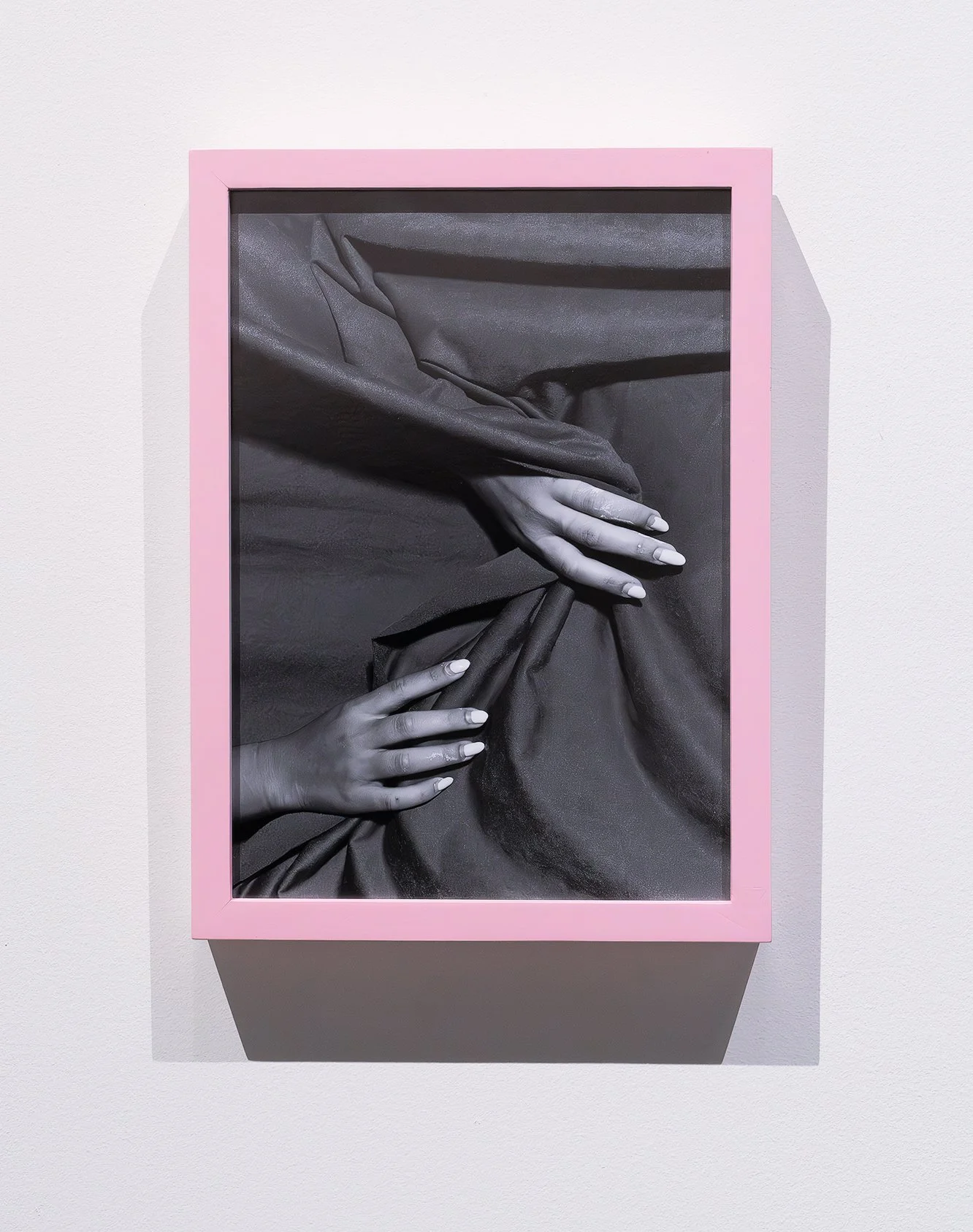
Breathing Under the Stairs, pigment print in artist's frame
You work across photography, video, sculpture, and installation. Did you know early on that you wanted to pursue a multidisciplinary practice?
My practice was already interdisciplinary before I had words to put to it. I made art alongside my research in cultural anthropology, and while these explorations may have looked different from the outside, they were constantly bleeding into each other conceptually. Photography in particular has a way of doing that, as it’s suffused through so much of our everyday lives and touches on art, science, history, pop culture, etc. I think seeing what it could (and couldn’t) do helped me to understand that the questions I had weren’t bounded by any one discipline, and that I could use the tools of many different modes of inquiry for my work. This happened fairly intuitively, and I think I may have assumed that everyone worked this way. It wasn’t until years later that I gained more perspective on my own process and thinking and had a richer understanding of interdisciplinarity. In terms of media, photography tends to act as a vehicle or bridge for me to consider other methods and materials … but ultimately, I’m pretty omnivorous and more concerned with: what are the right tools for these questions I want to dig into?
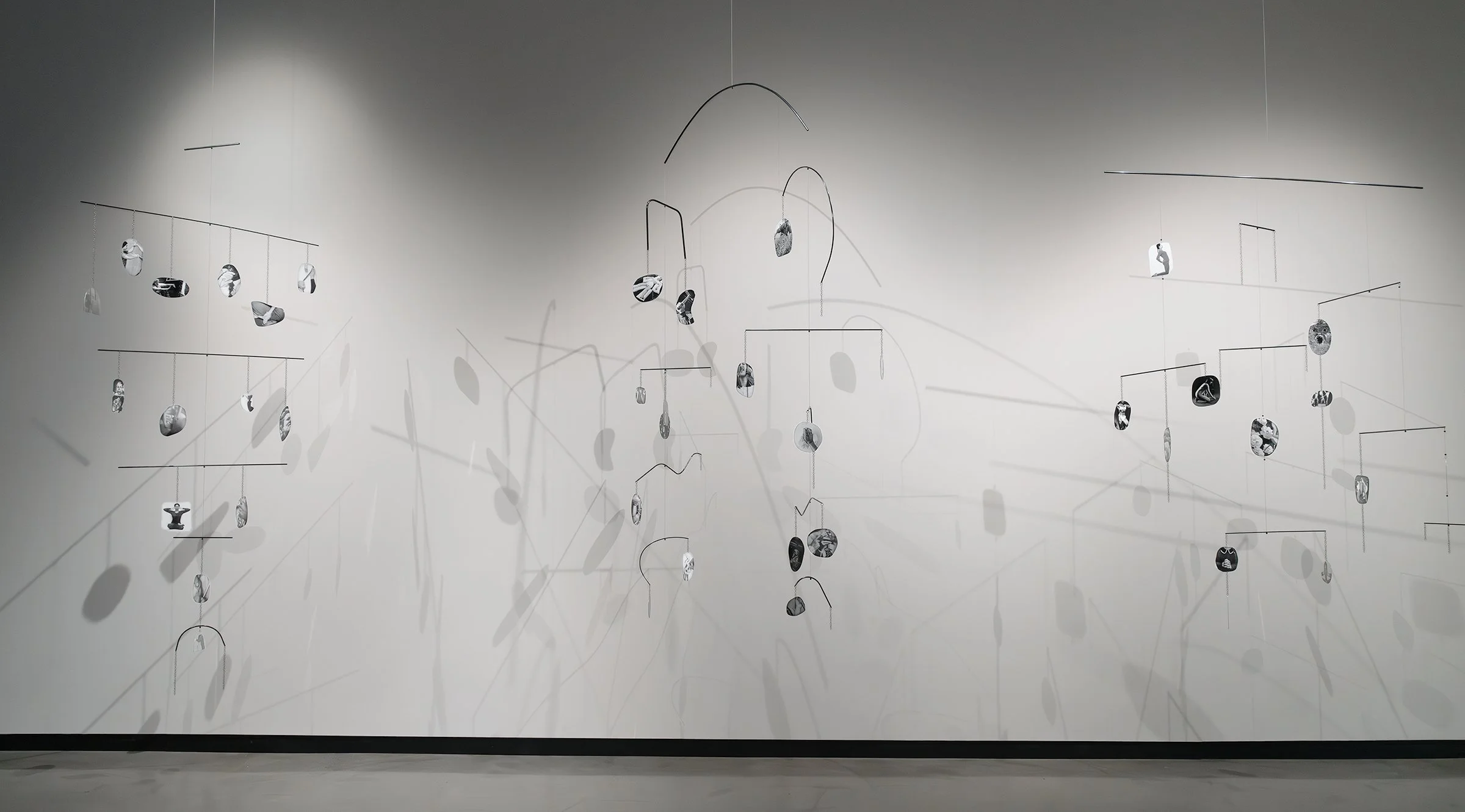
Mobiles (left to right titles: Not, You Look So Smug When You Talk About Feminism, Soft Landing)
I’m interested in your focus on materiality. When did that become part of your research, and what drew you to it?
This is one of the through-lines in my background. Much of my anthropological research focused on material culture, and so my interest in materiality artistically feels like an extension or deepening of that beginning. Photography’s materiality is fascinating because at its core, it’s really a combination of light, space and time rather than any particular material or piece of gear. That might sound abstract or philosophical, but really it’s just optics! I believe deeply that materials have meaning, and investigating this through photography initially felt paradoxical – what is the material of an image? – but led me to think more expansively about the relationship between images and objects. Ultimately, I now try to set up conversations in my work that often straddle moving and still images, and sculpture and installation.
Was there a breakthrough moment in your career that felt especially meaningful and helped propel you forward? Can you tell us about that experience and why it mattered?
If ‘breakthroughs’ can be slow and gradual, yes! The first is how my relationship to photography changed through studying visual anthropology. As I attempted to use photography as a research tool, I gradually became more and more fixated on the slipperiness of images, how contextually-dependent they were, and what they couldn’t tell us. That inherent refusal to be pinned down in any definite way was so exciting to me and held so much potential that it led me to center my art practice and move away from my Ph.D program. I still love how temperamental photography is and I think this understanding of images is still at the core of my work.
The second moment was becoming a mother, though again, this ‘breakthrough’ has been gradual and is still very much unfolding. I knew other photographer-mothers, and all of them told me how much becoming a parent changed their work, so when my son was born, I kept waiting for some kind of lightning-bolt epiphany that never came. I had no interest in making photographs of my children or more literal depictions of parenting (though there are plenty of artists who do this well). Several years in, however, I realized that being a mother had totally changed my sense of embodiment in the world. I began to ask more questions about the forces that play out upon or through a body, and to notice some of these same relational systems in the studio, in terms of different materials interacting. All of my research from that point forward has had some implied or actual relationship to bodies.
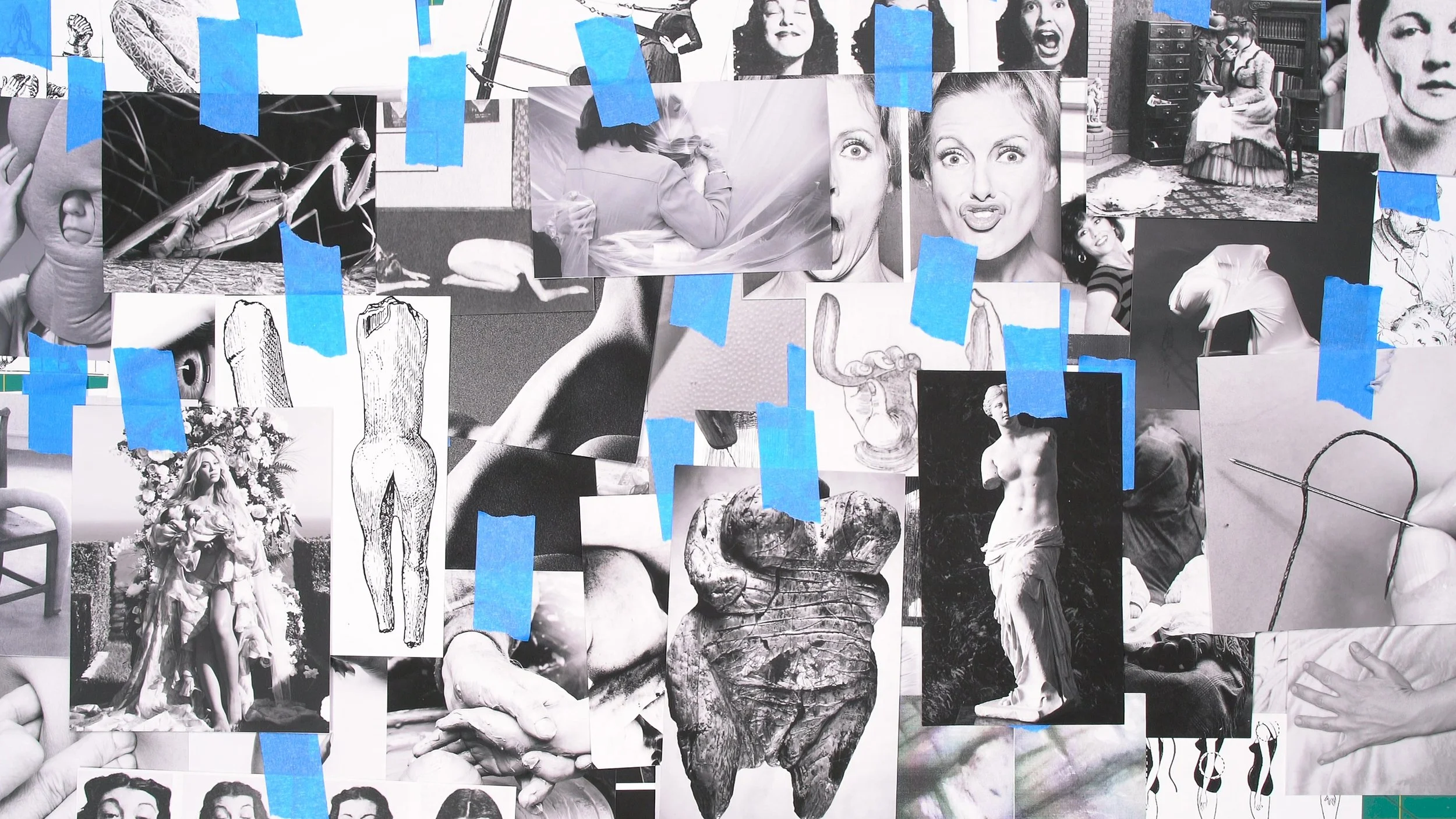
Still from Heavy Focus, single channel video
What ideas or concepts are you currently exploring in your work?
I’m quite interested in ideas of provisionality, relationality and interdependency right now. I’m using both bodies and different sculptural materials to explore these concepts; currently, I’m thinking about the idea of ‘rehearsal’ – what it means for images and materials to come together in provisional constellations that can be re-formed and re-shaped continually. Some of these ideas are evident in my recent video work, as well as the three large sculptural mobiles I made a few years back. I’ve been looking to the performing arts–dance and music (I used to play music, and my son is a musician)– and researching Brecht’s dramatic theory to explore the notion of rehearsal as a goal unto itself rather than a stepping stone to something more fixed or finished. I’m interested in the underlying and shifting psycho-social dynamics of rehearsal, as played out through images or materials.
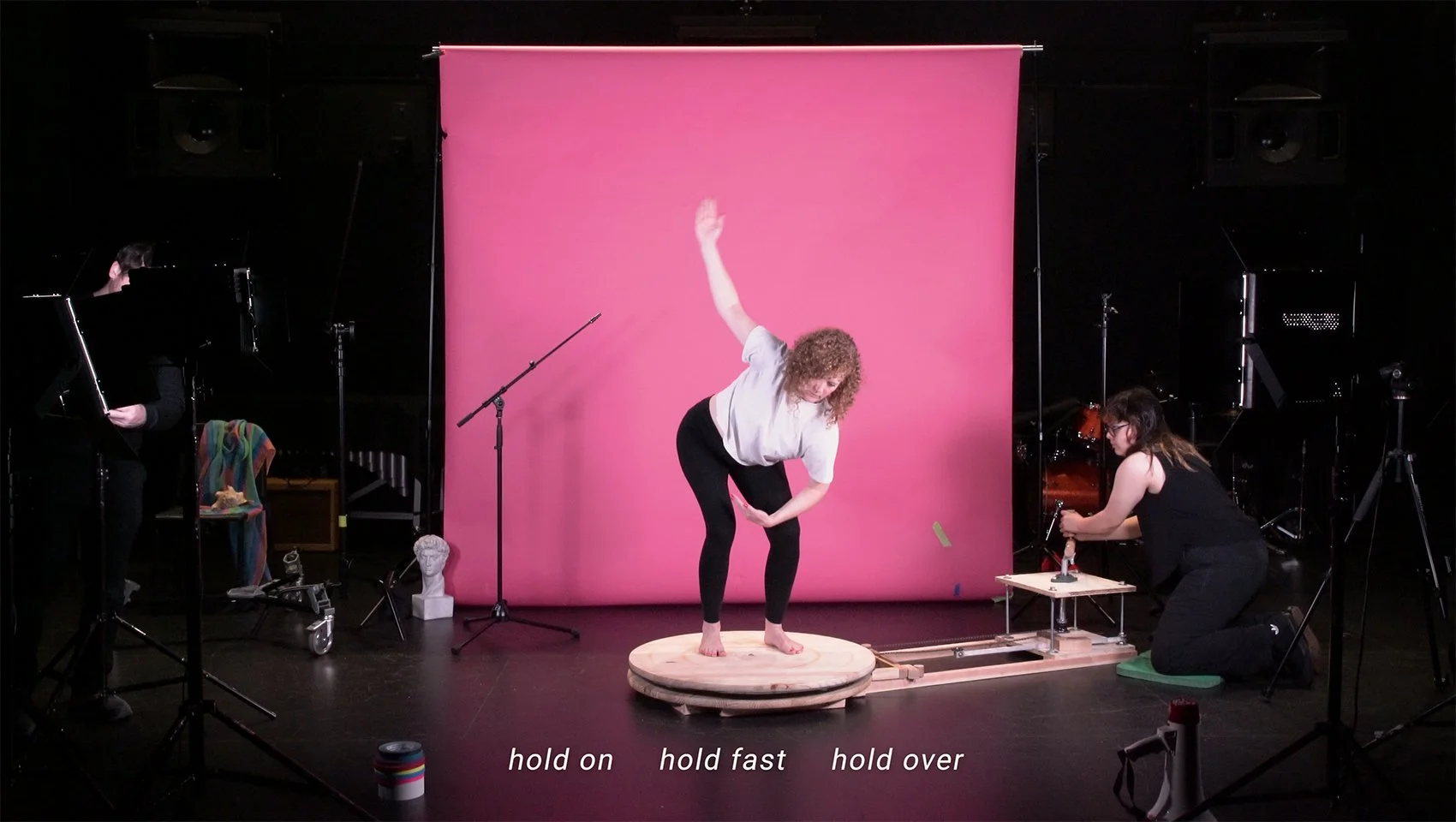
Still from Lazy Susan, single channel video
Can you talk a little about your creative process? Do you begin with an idea, an emotion, an energy, or an image? Do you have any specific rituals or routines when you work?
This varies so much for me. I’d say most of my ideas come from what I’m reading and finding unexpected resonance between that and what I’m experiencing through playing around with different materials or processes. I tend to find that once I latch on to an idea, I see echoes of it everywhere, in what I’m reading, watching and listening to.
Who are some of the artists who have inspired your work, and why?
In no particular order, and for many different reasons: Carmen Winant, Gordon Hall, Juhani Pullasmaa, Pina Bausch, Hito Steyerl, Alina Tenser, Camille Henrot, Cady Noland, Lisa Seebach, Rachel Cusk, Jenny Offill, Joanna Piotrowski, Chantal Akerman
Where do you travel to when you need inspiration - what cities have an art scene that excites you?
I really enjoyed living in Chicago in terms of the vibrancy of art being made in that city at all levels. While I enjoy seeing art in cities, I think I also get excited when I find a museum, gallery or artist-run space that is outside a major city but is doing something exciting. This is why I was so blown away by the Louisiana Museum outside Copenhagen when I first went there (and I’m not just saying this because you’re Danish!). I need a bit of time and space to digest things, so I think the inspiration often comes to me after the fact, when I’m in quieter spaces. I need both.
We originally met at Cornish College of the Arts in Seattle, where you were teaching in the Art Department, and you are now teaching at Emily Carr University. Has teaching always been important to you? How do your teaching and art-making practices inform one another? Has teaching helped shape your creative voice in any way?
I taught throughout my Ph.D program and I love working with students. There’s a reciprocal relationship I find between teaching and working in the studio. In class, I bring in artists and readings that feel important to digest as a group or are intended to challenge students or offer some kind of reframe, which I find is important when I teach a medium that everyone thinks they already know a lot about. Students bring to this their own ways of knowing, their perspectives and questions that I also learn from. When education is working well, this is the generative, creative and challenging water I hope we all have a chance to swim in. Teaching can be many other things as well, but this is the ideal I aspire to, even when institutions fall short of supporting it or have other priorities.
What, in your view, makes a great art teacher?
Someone who values and models curiosity. Someone who helps you to understand context, history, interconnectedness and the bigger questions. Someone who brings depth and empathy. Someone who calls you on your bullshit.
How do you think the art world in Vancouver differs from the art world in Seattle, if at all?
I’m still working to understand this, as I’m fairly new to Vancouver. Both are relatively small, and Vancouver is even more de-centralized than Seattle. Both are expensive places to live and work, which impacts the entire arts ecosystem and often means fewer galleries and artist-run spaces. There’s a long legacy of photoconceptualism in Vancouver that has been interesting to orient myself around, which Seattle does not have to the same degree. I think both places also struggle to support the arts in ways that are stable and ongoing, despite being wealthy cities.
What excites you about working in Vancouver and in Canada?
There are generally more funding opportunities in Canada than the US, particularly now that the relatively meager federal funding opportunities in the US have been decimated by the Trump administration. I’m also enjoying learning more about Canadian artists.
If you hadn’t become an artist, what profession do you think you would have excelled in?
A writer. Creative non-fiction. Or maybe a landscape architect.
Can you tell us about the projects you are currently working on and exhibitions you have coming up?
I’m currently working on a multi-channel video installation that I hope will have a sculptural component. Over the past year, I worked with both dancers and non-dancers to perform different movements and gestures adapted from self-regulation exercises, self-defense techniques, and embodied forms of phenomenological psychodynamic therapies. I’m interested in how these movements are improvised, performed and re-performed by the participants in ways that subtly–or sometimes abruptly–change the social field. For instance, how a single gesture can read as tender versus violent, or how bodies interacting negotiate space, gravity, awkwardness or relational awareness to form unstable constellations or create a shifting relational system. A lot of these core, underlying ideas are shared by different practices that span sculpture, performance, dance, phenomenology and psychology, which I find exciting. Researching all of this, weaving together some of these concepts and histories, and collaborating with participants who have very different levels of movement experience is keeping me engaged.
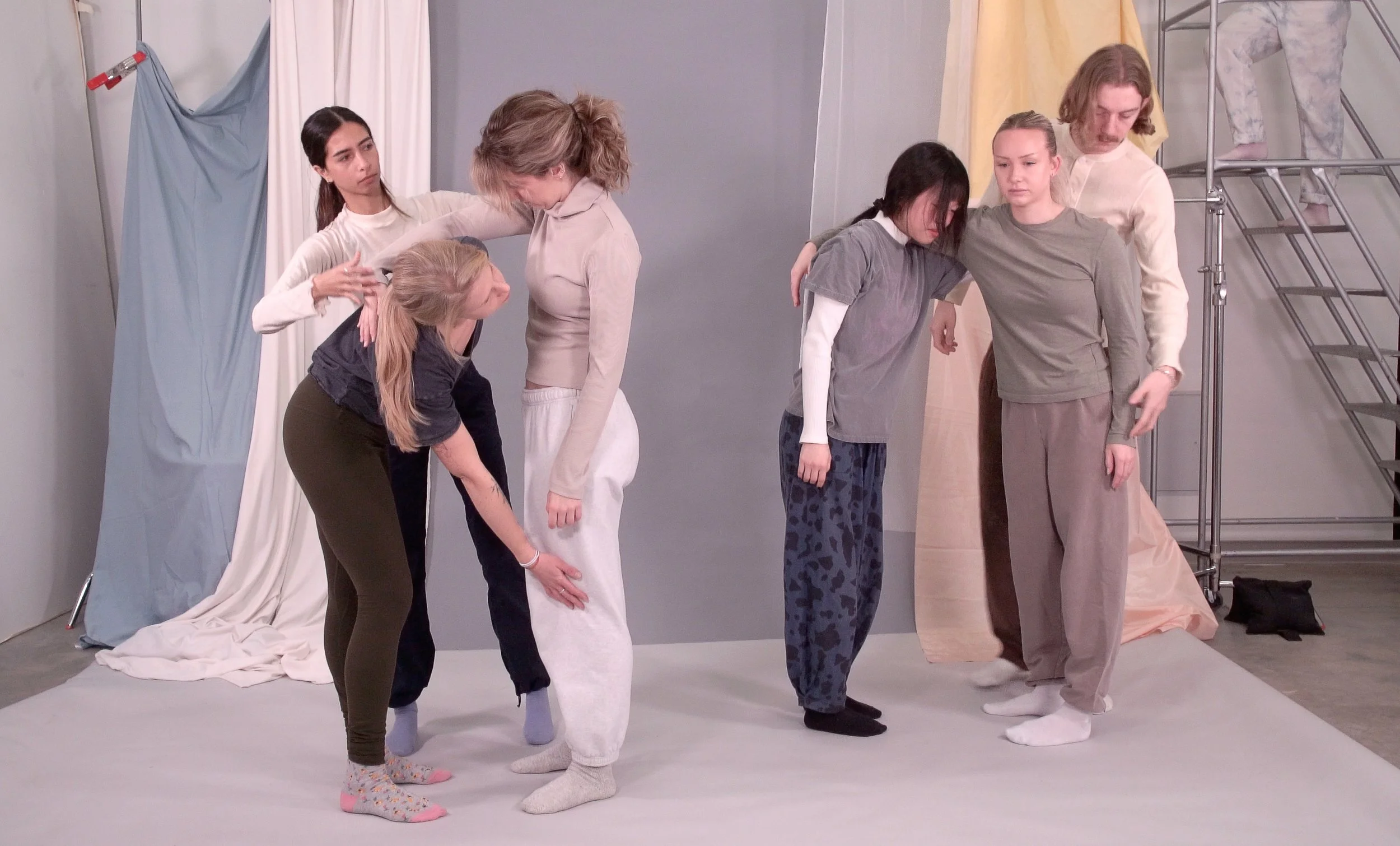
The current video that Laura is working on (title TBD).
Looking toward the future, where would you like to be—and what would you like to be doing—in 25 years?
I’d like to be making art. I hope to be doing that in a good community of creative people. I hope I’ll be spending time with my kids who will no longer be kids, and my partner. And I hope I’ll be digging in my garden.
Learn more about Laura’s work by visiting her website.