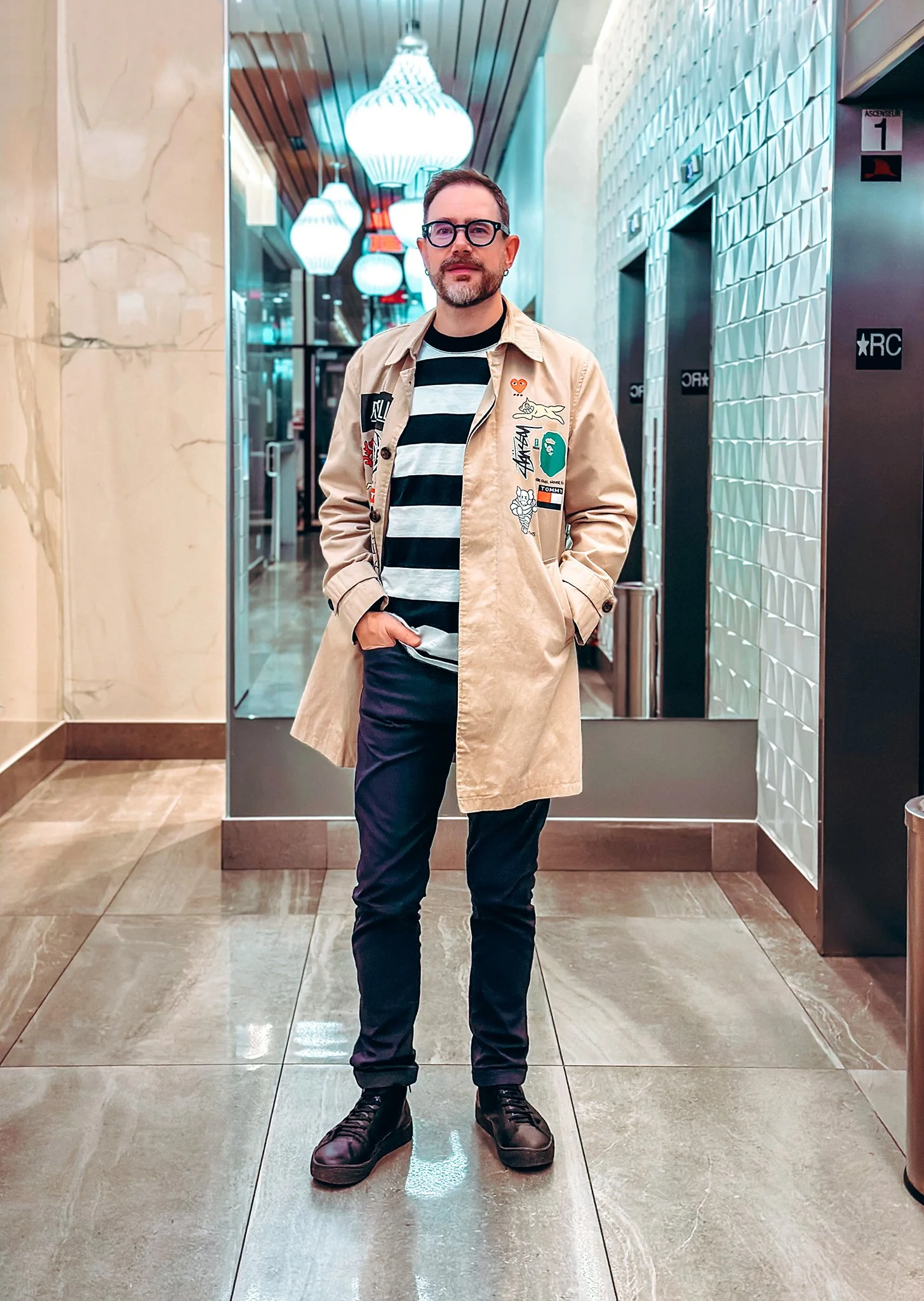
Jesse Walker in Montreal, Canada, 2025
As part of NOW-ID’s Ne Plus Ultra interview series—highlighting artists and designers creating impactful work—we are excited to feature longtime collaborator and friend, DJ Jesse Walker.
A key figure in underground dance music and community culture, Walker’s influence spans Idaho, Salt Lake City, and his current base in Vancouver, BC. Since teaching himself to DJ in 1993, he has built a career rooted in independence, experimentation, and connection.
In 1998, he founded New City Movement (NCM), helping shape Salt Lake City into a recognized hub for house music and creative exchange. As a DJ, his sets are immersive and soulful, and he has appeared at major events including the Sundance Film Festival, the 2002 Winter Olympics, and Treefort Music Festival.
Walker’s practice extends beyond music into design and multidisciplinary collaboration, working with organizations such as the Utah Museum of Contemporary Art, the Utah Arts Festival, and NOW-ID. Now based in Vancouver, he continues to cultivate community, support emerging talent, and create spaces for shared experience.
TELL US A LITTLE ABOUT YOUR BACKGROUND. WHERE DID YOU GROW UP, AND WHAT ROLE DID MUSIC PLAY IN YOUR EARLY LIFE? WERE THERE ANY FORMATIVE MOMENTS, INFLUENCES, OR ENVIRONMENTS THAT SHAPED YOUR CONNECTION TO MUSIC?
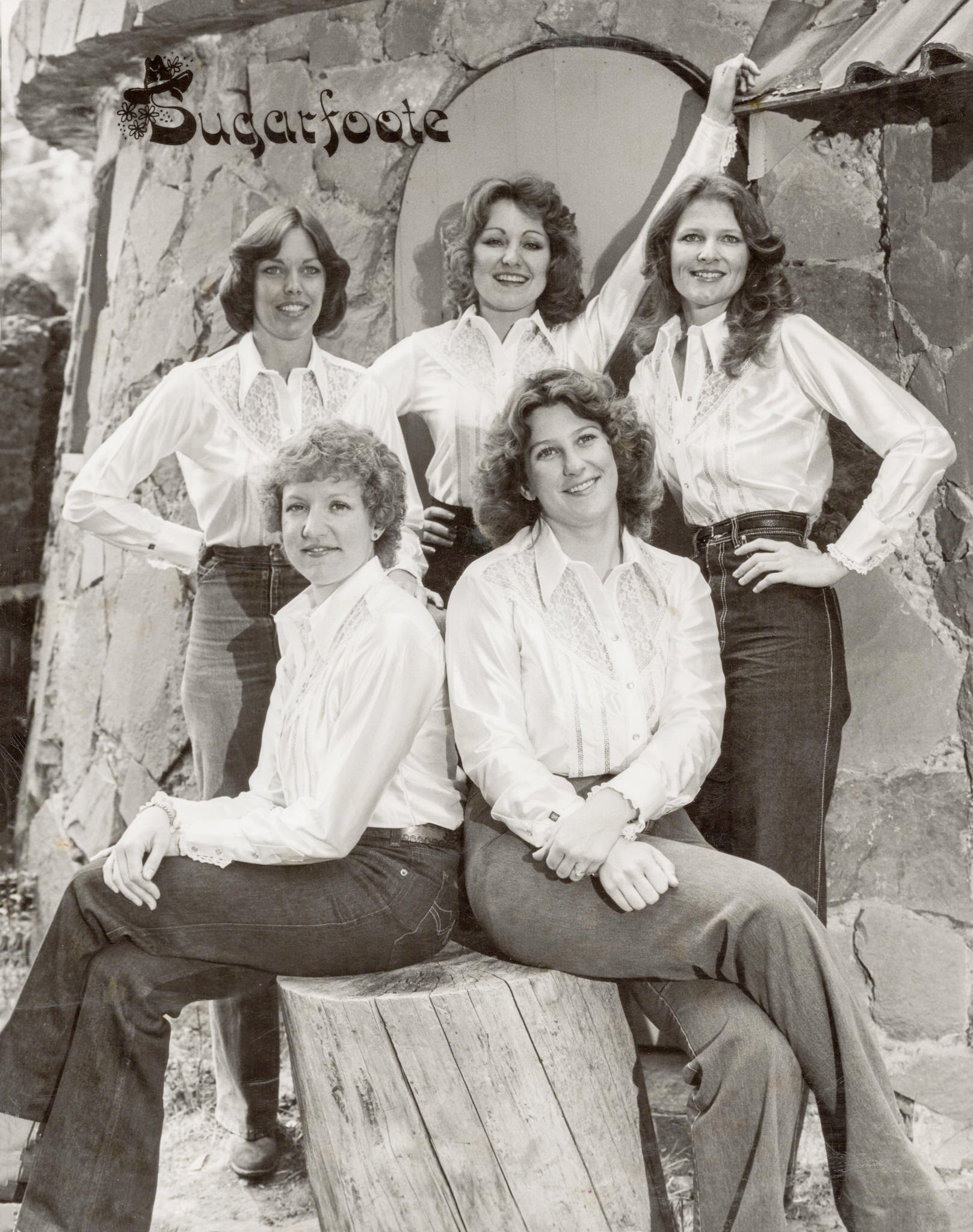
Cynthia Walker (top left), with Sugarfoote (Photo: Clay Walker)
I grew up in a rural suburb of Idaho Falls, Idaho. Think wide open, windy, lava rock, sagebrush and dirt roads going nowhere in particular. It wasn't the worst place to be a daydreamy kid with time to kill. Music came early, through my mother, who sang in an all-female country band called Sugarfoote, and was encouraged throughout my childhood with piano and voice lessons, including community and school choirs. Having dyslexia and ADD, I never really learned to read music in the traditional sense. I was taught Suzuki method, where you play by ear first, which turned out to be a gift.
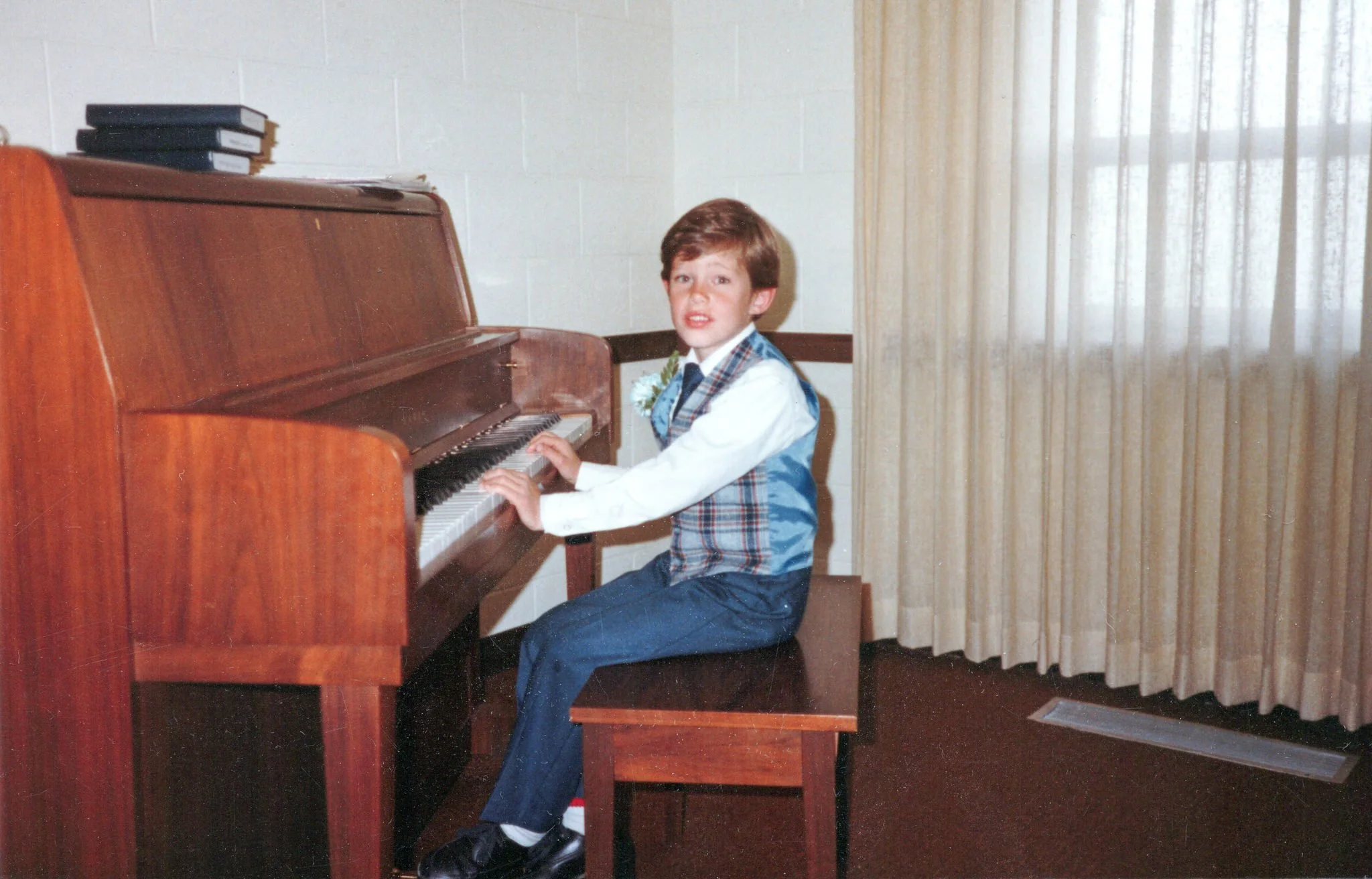
Piano recital at church
Music was my first passion, escalating with my fascination with FM radio. I'd race down to my bedroom after three hours of Mormon church on Sundays, finger on the tape record button waiting for the top tunes on Casey Kasem's 'American Top 40' countdown. Another four hours well spent with no fast-forward. The soaring power ballads, moody modern rock, hip-house, and synth-driven pop sparked something in me. I was awakened pivotally by Janet Jackson's "Rhythm Nation 1814" concept album, Depeche Mode's late-80s trilogy of 'Music for the Masses,' '101,' and 'Violator' and similar mould-breaking artists... Madonna, The Smiths, New Order, George Michael, Blur, Deee-Lite, Erasure, etc. Remix culture was reaching new heights, not just for disco DJs, and the 12-inch single became a kind of holy object to me even before I could afford vinyl. Studying liner notes and remixer credits led me to all kinds of electronic music coming out of NYC, Detroit, and the UK like Moby, Orbital, Richie Hawtin, and The Orb.
I was also the front man for a kind of melancholic, introspective, not terribly good band in high school with my friends. We played shows around town, then organized several quite successful 'alternative music' festivals, which had me dabbling in poster design and emboldened my music tastes and a desire to perform even further.
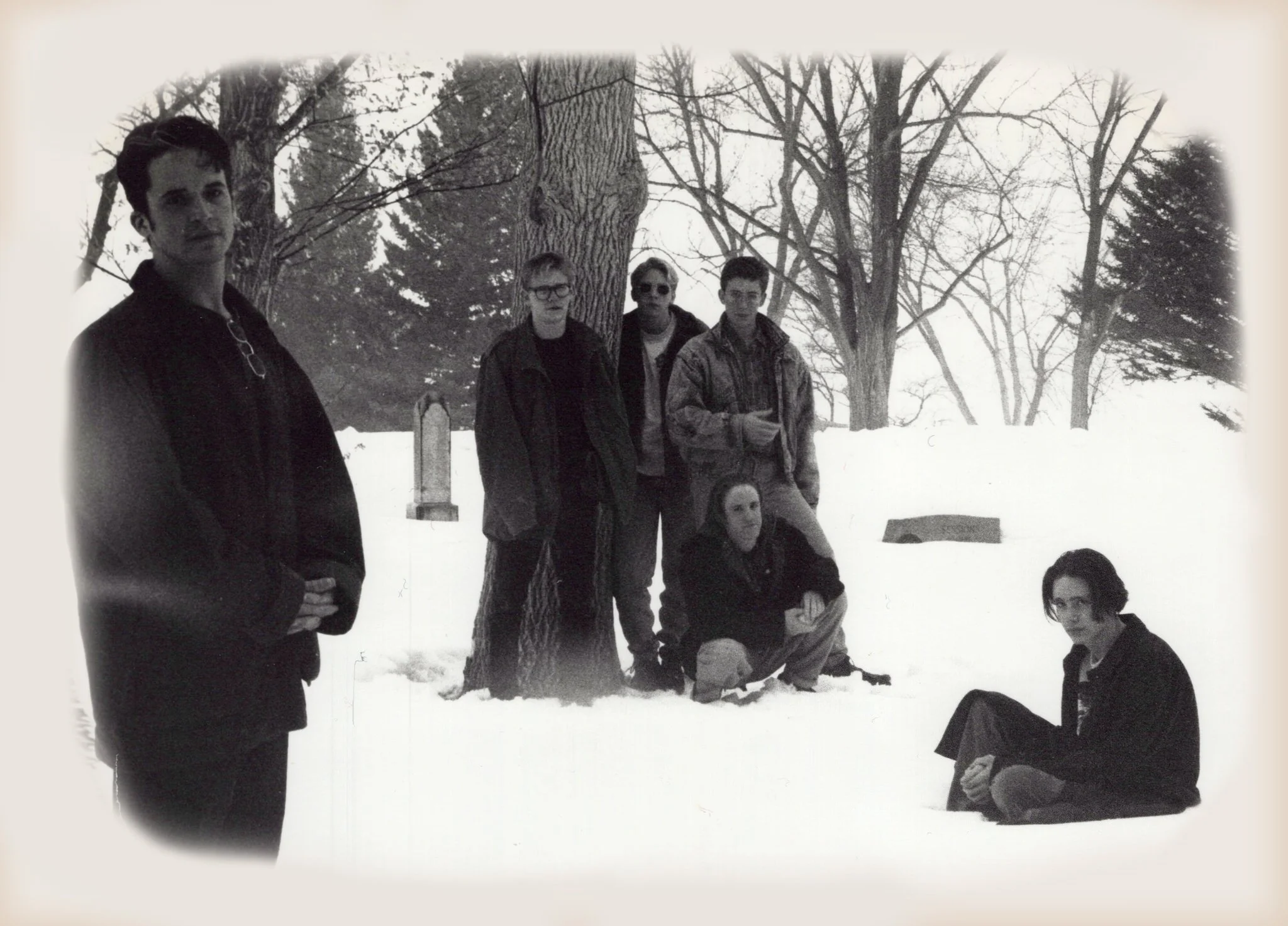
The Kirkyards (high school band photo — at the cemetery, of course)
CAN YOU TELL US HOW YOU FIRST GOT INTO DJING? WHAT DREW YOU TO IT AT FIRST, AND WERE THERE PARTICULAR DJS, SCENES, OR EXPERIENCES THAT INSPIRED YOU TO PURSUE IT MORE SERIOUSLY?
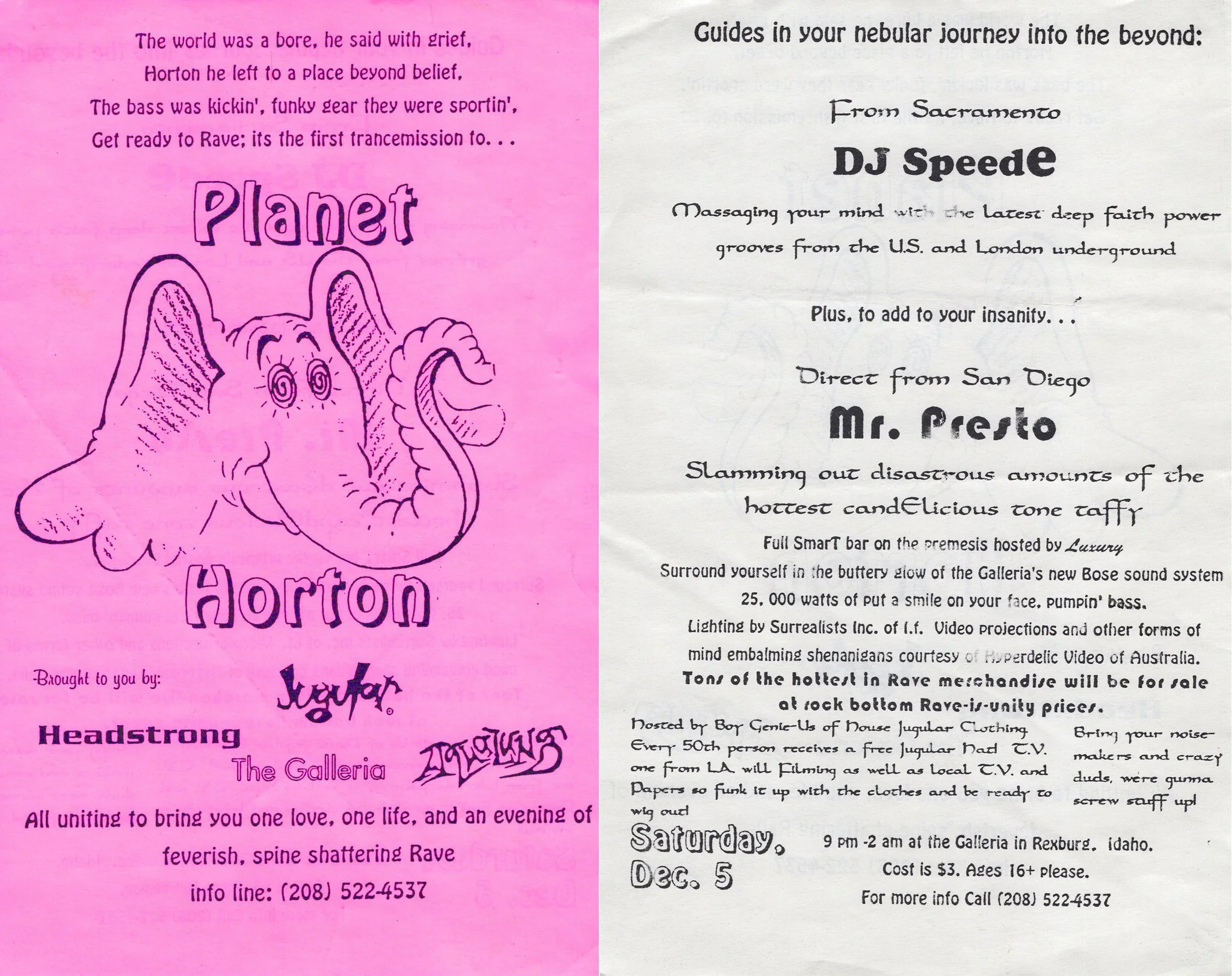
The first rave Jesse attended
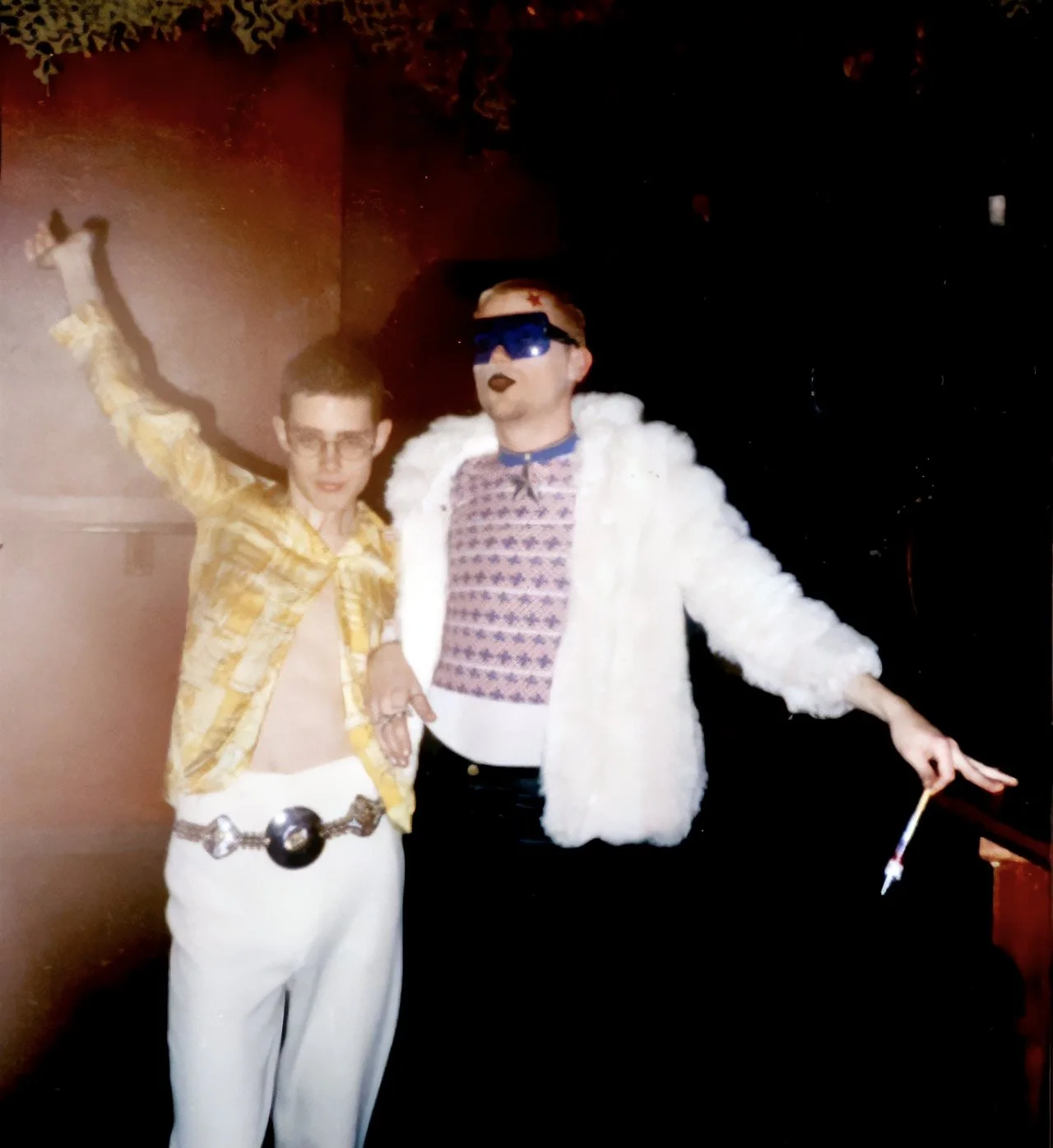
Jesse with fashion designer Jared Gold at The Vortex SLC, 1995.
It started with a rave. A now legendary local fashion designer, candy maker, and promoter by the name of Jared Gold brought DJs in from California to take over an 18+ college dance club in Rexburg, Idaho and that completely rewired my brain. The fashion, the attitude, and strobe lights! It was the punch of full spectrum color I didn't know I'd been missing. Everything clicked together. I started following him everywhere, an insatiable student. He introduced me to a DIY culture, screen printing, Barbarella, My Bloody Valentine, Andy Warhol, John Waters, and my first drag queens. A whole vocabulary handed to me all at once.
Becoming a DJ was everything to me in that moment. I cobbled together a mismatched pair of home stereo turntables and a Peavey club mixer and taught myself to beatmatch on records I'd picked up on trips to Salt Lake City, which was a three-and-a-half hour drive each way. I'd make that trip to buy vinyl, attend parties, or even rent a single club light or fog machine that weren't available in Idaho, return them the following week only to buy more records. Eventually that led to moving to Utah immediately after high school to continue working in nightlife with Jared.
One turning point, as far as DJs go, was watching Doc Martin (LA) work three turntables at a downtown super club, the Vortex. He toured with Deee-Lite and had this high-octane, tribal, train-about-to-go-off-the-tracks style of playing house music that blended the best the West Coast, NYC, and London scenes had to offer. That opened my mind to the possibilities of what a truly experienced, multi-dimensional DJ can do.
WHEN CURATING A DJ EVENT OR SET, WHAT IS YOUR PROCESS? HOW DO YOU SELECT TRACKS, READ THE ROOM, AND BUILD AN ATMOSPHERE?
I try to always have a sense of the mood or arc I want to build, but the best sets happen when you're listening as much as playing. If you are fluent in your catalog and are organized, it's easier to jump around and follow the energy. I like to lure people into a false sense of security, then flip the script. Main priority is a high taste level above all else and not forgetting to have fun. Very important.
On the event side, the same logic applies at a larger scale. I learned from watching Jared how creating a flammable cocktail of contrasting elements can make any party sing (or get the cops called on you). Other influential collaborators have taught me a lot about the power of giving people ownership in the process, and the ongoing importance of equity and equality in dance music and beyond. If people feel seen, and safe, they can be themselves fully and that's a rare and beautiful thing.
IN YOUR VIEW, DOES A GREAT DJ SET NEED A NARRATIVE ARC OR AN EMOTIONAL PROGRESSION?
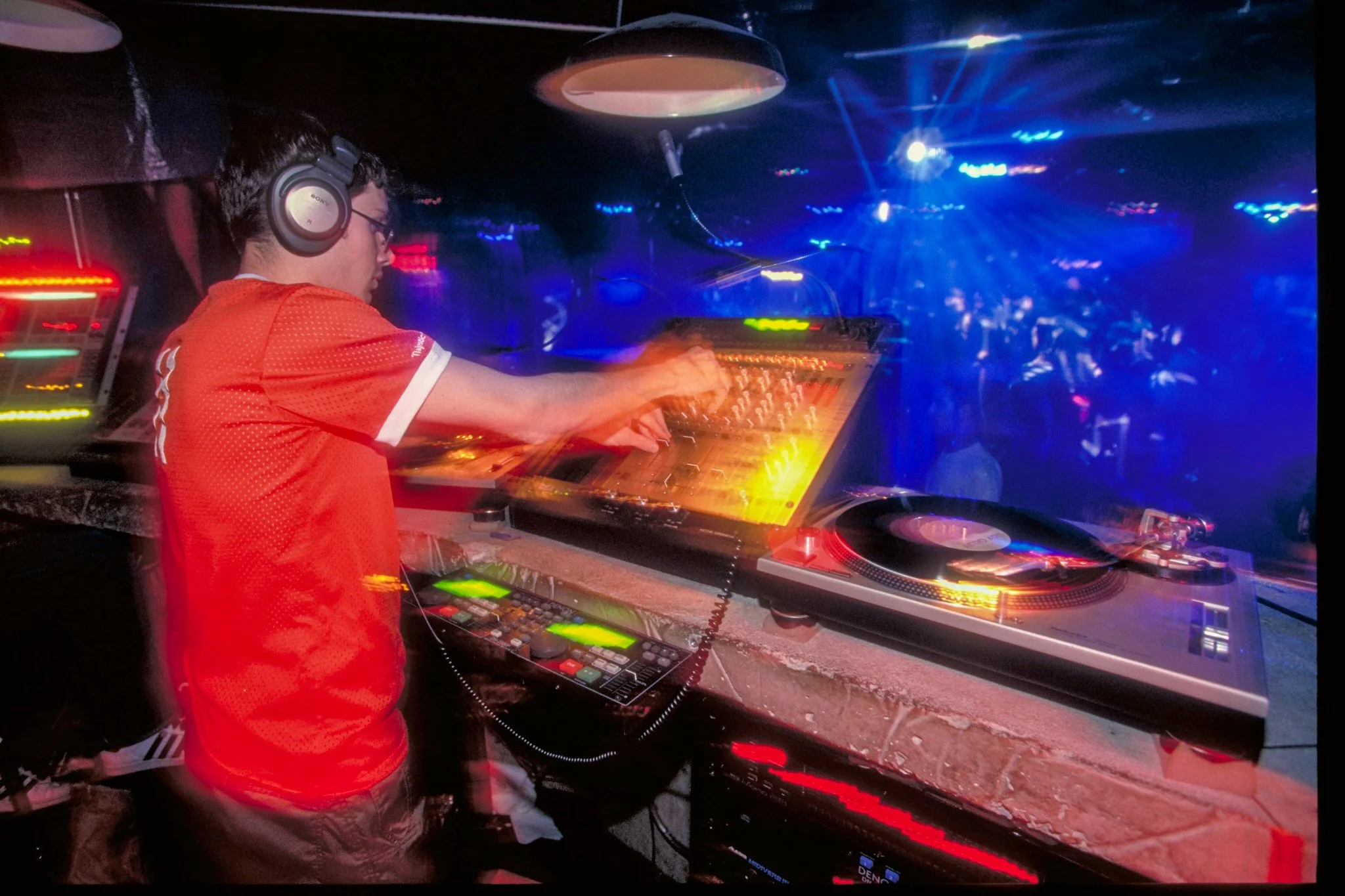
Jesse playing vinyl at Bricks Club, 1997.
Yes, absolutely. There's an emotional logic to a great set. You draw people in, then hopefully take them somewhere they didn't expect to go. I think it's more important for takeoff and landing, whereas the middle part is where a great DJ can play anything and make it make sense.
What does an ideal set length look like to you, and how do you balance planning with improvisation in the moment?
Anywhere between 90 minutes and three-plus hours is standard for experienced DJs. More enjoyable to stretch out and play with range. I used to go six or longer back when I had a warehouse of my own hosting afterparties. It's good to plan your very best, and be prepared for the worst. If you're in sync with your music library and state of mind, you can reach a flow state between you and the dance floor that can be pure magic.
YOU'VE BUILT A STRONG REPUTATION AS A DJ, STARTING IN SALT LAKE CITY AND NOW IN VANCOUVER. WERE THERE ANY STANDOUT EVENTS OR TURNING POINTS THAT HELPED ELEVATE YOUR PROFILE? WHAT DO AUDIENCES TYPICALLY EXPECT WHEN THEY COME TO SEE YOU PERFORM OR HIRE YOU, AND HOW WOULD YOU DESCRIBE YOUR STYLE?
I definitely flourished living in Salt Lake. After playing what felt like hundreds of small gigs at raves, house parties, restaurants, and dive bars, I started getting residencies at reputable venues where I could test out concept nights and hone my craft. The Urban Lounge, Manhattan Club, Bricks, Axis, The Red Door, Club Blue, and the mighty W Lounge come to mind. I had several important mentors who gave me up close and personal access to traveling DJs, opportunities, and experiences I'll never forget, like tagging along to go crate digging with "CJ" Mackintosh, who's responsible for adding the scratching element to M|A|R|R|S' 1987 hit "Pump Up the Volume."
Outside of clubland, the incomparable Gary Vlasic brought me in for high-profile corporate gigs like museum galas, downtown art activations, fundraisers, and festivals, including Sundance, which led to even bigger opportunities performing at Utah Pride, during the 2002 Winter Olympics, and opening for acts like Empire of the Sun, Crystal Waters, and En Vogue. Working with NOW-ID on many site specific projects has been beyond rewarding as well.
Throughout all of this, my collective New City Movement with Matthew Fit and lots of other amazing people has tried to build something that is about more than just nightlife. It's been about creating our own fun, community, and activating culture in a city that's needed the occasional nudge.
My DJ style is warm, gay, and groovy, always reaching for emotive. Rooted in the history of vocal, funky, acid house, and disco, I like to ride the line between current and classic, familiar and underground.
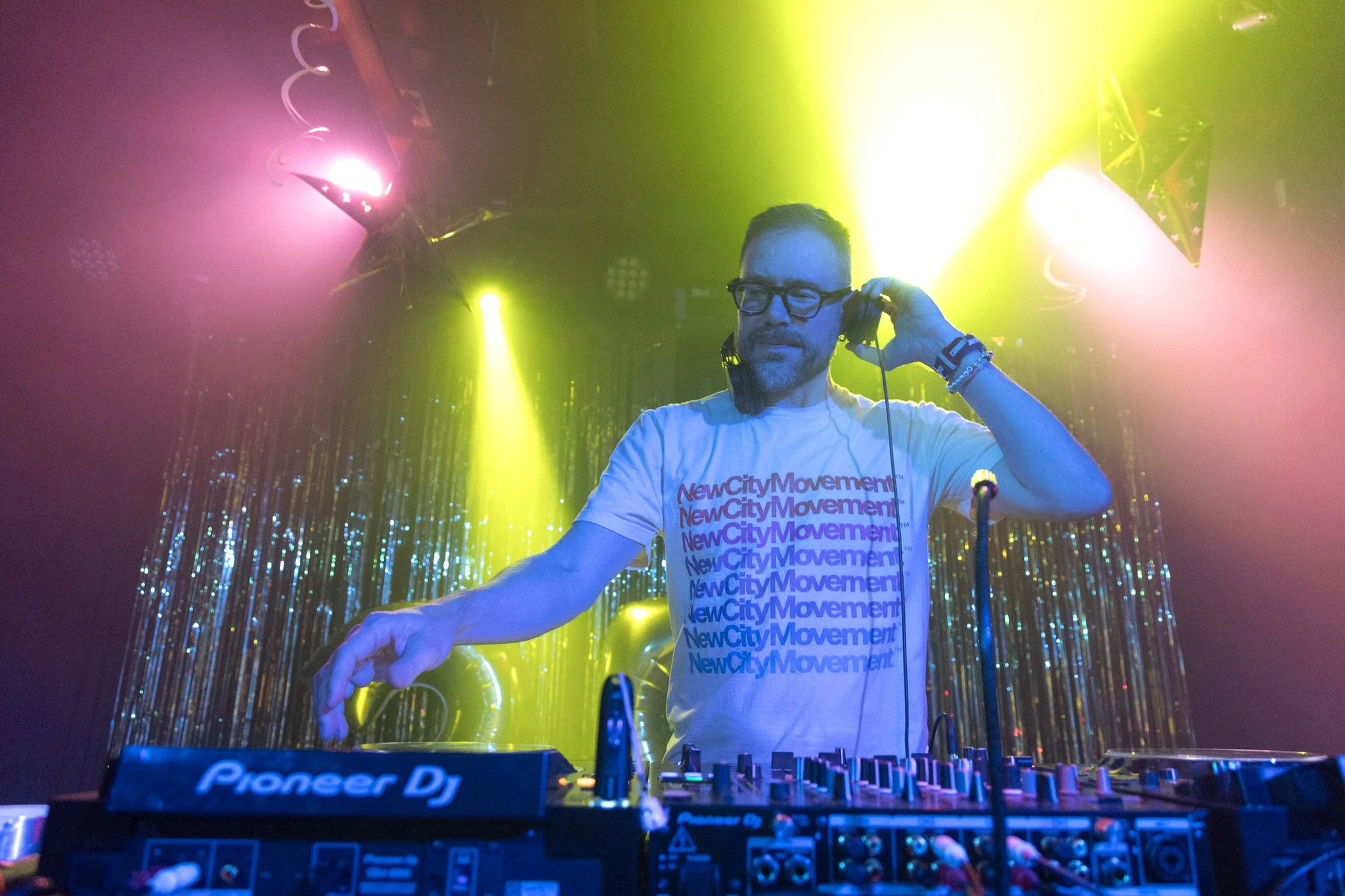
NYE at Urban Lounge, 2025
HAVING WORKED IN BOTH CITIES, HOW DO YOU SEE THE DJ AND MUSIC SCENES IN VANCOUVER AND SALT LAKE CITY DIFFER? ARE THERE ANY PARTICULAR CULTURAL OR CROWD DYNAMICS THAT STAND OUT?
They are strangely similar in scale, both mid-size markets, but the energies and emphasis can differ. Utahns are pretty chatty and boisterous, often because they're genuinely excited to find anyone who cares about music the way they do. There's a wild-west spirit to existing in Salt Lake, generally, that's exciting and exhausting in equal measure. Over the past decade it's had a real renaissance of after-hours nightlife and emerging talent thanks to hard working party promoters of all stripes. I feel like it's on the map more than ever before, post-Covid.
Vancouver club goers are perhaps a bit more informed about who they're going out to support. They definitely show up in force, stay beginning to end, and commit to the experience. The Pacific Northwest has produced many world-class, connected DJs, labels and festivals, and people here take music seriously. Both places share our current struggle with venues, budgets, and city governments that don't always recognize what we do as culturally valuable. Nine times out of ten these are some of the safest, most self-policing communities you'll find anywhere. A tradition built and protected by Black, brown, trans and queer people, and it deserves to be treated with that kind of care and respect.
WHAT TYPES OF EVENTS DO YOU FEEL MOST DRAWN TO, AND WHY? ARE THERE ANY UPCOMING PROJECTS, COLLABORATIONS, OR PERFORMANCES YOU'RE ESPECIALLY EXCITED ABOUT?
Events with real intention behind them, where they shake up the norms, where the artists, the environment, audience and music are all in conversation with each other. Queer events and underground parties have always felt like home for that exact reason.
We just wrapped our 16th annual Bunny Hop easter event in SLC raising close to $16k for local charities. So proud of everyone involved with that modest legacy.
Right now I'm deep in co-curating and hosting this year's Public Disco Pride Block Party with DJ Dood, one of the most creatively satisfying things I've taken on since moving to Vancouver. And I'm regularly playing with different collectives, including the crew I've been welcomed into here, Main Street Dance Authority, who've been doing something really special at the Lido every second Saturday for over a year now. There's cool stuff happening in this city on tight margins, for the right reasons.
WHO OR WHAT CONTINUES TO INSPIRE YOU CREATIVELY IN YOUR WORK?
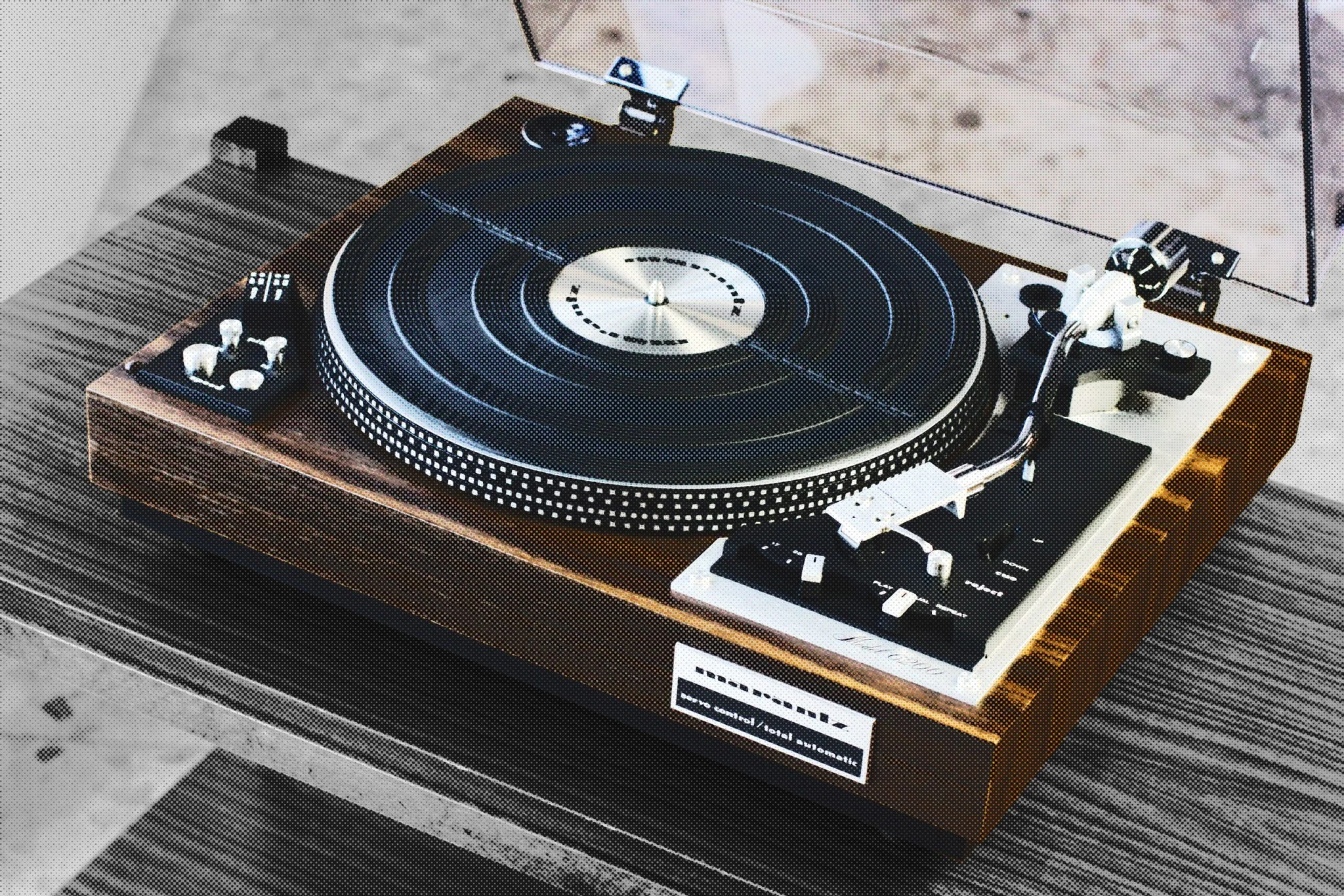
One of Jesse’s first turntables. A highly regarded vintage Marantz 3200 from the mid-1970s plus a Technics SL-B2.
Contrast, more than any one thing. I'm a huge proponent of listening to and appreciating all kinds of music, art, film and culture at large. I think it makes for a more interesting DJ and a more interesting you. I love experiencing things that aren't necessarily my taste or my crowd sometimes, because it forces you to reflect and grow.
My husband Mark gives me daily creative inspiration and support. He's the most innately creative, capable person I’ve ever met. We have a dream dialogue going between us and our world, and he has been there for me every step of the way.
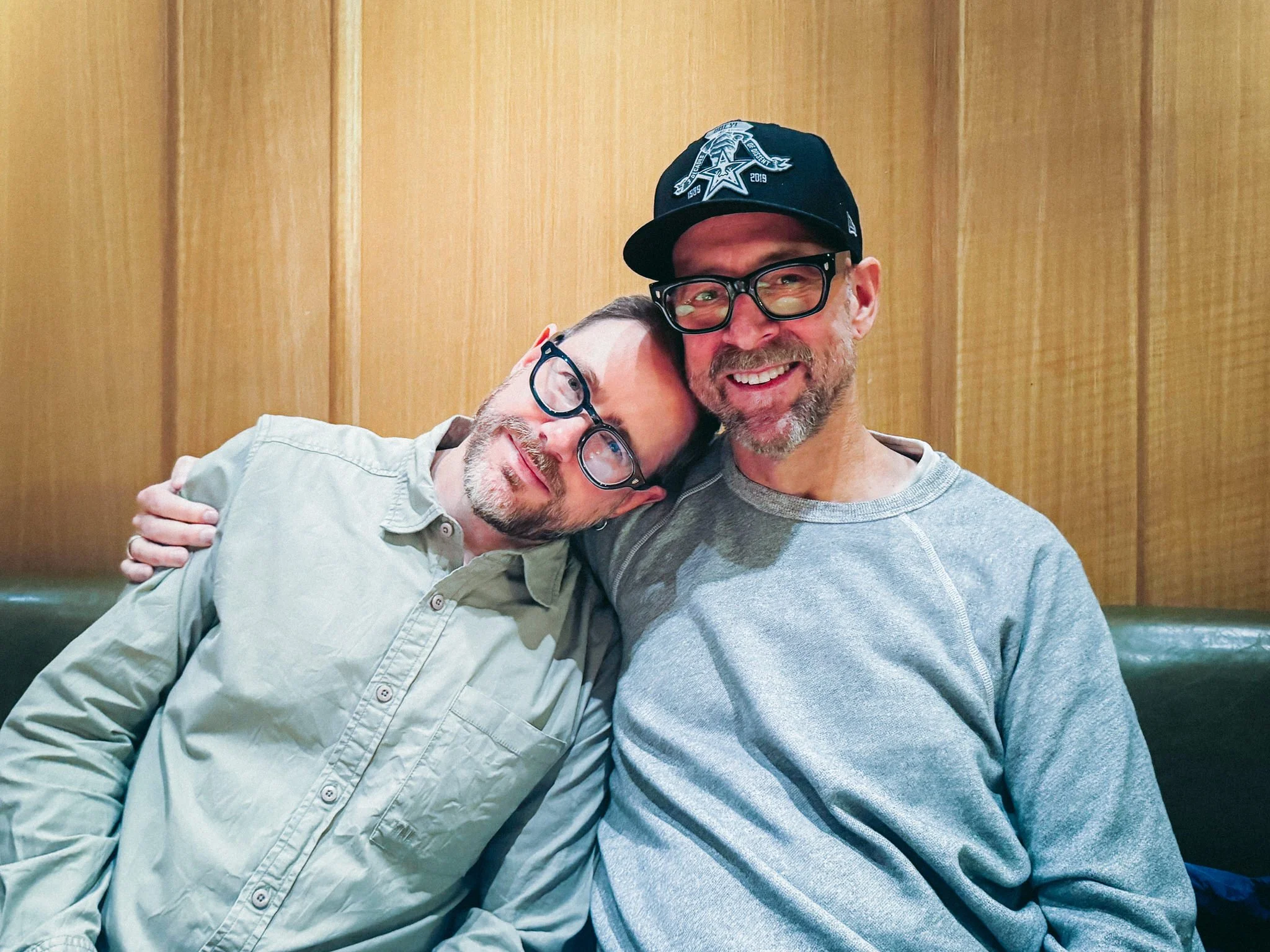
Jesse with husband Mark Hofeling
Looking globally, which cities do you think have especially vibrant or influential music scenes right now? What makes those places stand out to you?
Barcelona, Mexico City, Medellín and Berlin are all creating something vital right now. Chicago and Detroit never stopped being foundational. So much of what the rest of the world is doing with dance music traces back there. And Montreal, here in Canada, is wholly unique. Stereo is still one of the best clubs in the world, and MUTEK, the avant-garde electronic music and digital arts festival, is something I'd very much like to experience.
ARE THERE ANY DJs OR ARTISTS YOU'RE PARTICULARLY EXCITED ABOUT RIGHT NOW? WHAT ABOUT THEIR SOUND, STYLE, OR APPROACH RESONATES WITH YOU?
Specifically right now, DJ Soos, a Mexico City-based producer blending dubby house, dreamy downtempo and nostalgic techno. I saw him play last week and it was everything I hoped for. Saya Gray and Rochelle Jordan are doing extraordinary things at the crossroads of experimental pop, R&B, and electronic music. The 46-track TRAИƧA compilation that came out in 2024 celebrating trans and non-binary artists genuinely moved me. A record store owner in SLC also turned me on to Jimi Tenor, a Finnish multi-instrumentalist blending jazz, afrobeat, funk and electronics, and I love stuff like that. Seeing Air perform at Queen Elizabeth Theatre, Johnny Marr of the Smiths, and New Order's Peter Hook & The Light were also major highlights.
Beyond all of that, Colored Craig out of LA and New York, and CarrieOnDisco from San Francisco. Both are rooted in vinyl, and Craig is vinyl only, which is rare to see, especially at queer events. We are thrilled to be bringing them both to Vancouver this summer with major Canadian talent for the Pride Block Party. I think it's going to be a sight to see and hear.
More broadly, I'm in a place right now where I'm more energized by championing rising artists than any particular name. Paying it forward is where my attention is.
Now that you're based in Vancouver, what excites you most about the city, both personally and professionally?
Being in a dense, walkable, verdant downtown neighborhood by the ocean is completely new for us. I just start walking every day in any direction and find something I haven't seen before. Living on a peninsula creates its own feeling of belonging to a particular place. The West End, the marinas, Stanley Park and beyond. I'm still loving every minute of it.
My husband Mark and I moved here in 2023. He's a dual citizen who has worked in Canadian film and television for years, and we've always had a soft spot for this country's emphasis on collectivism and multiculturalism. I'm applying for citizenship this fall, which feels like its own kind of arrival.
Professionally, I'm moved by the creative people I've found here. There's a wealth of talented designers, architects, small business owners, DJs and promoters making their mark.
YOU ARE ALSO AN EXTRAORDINARY GRAPHIC DESIGNER. DO YOU FEEL THAT YOUR GRAPHIC DESIGN STYLE AND YOUR DJ WORK ARE IN DIALOGUE?
They come from the same place, without question. I came up in both without formal schooling. Completely self-taught in design at the school of hard knocks, and eventually getting a real-world education from some genuinely brilliant people. My business partner at MODELIC, Matthew Coles, shaped how I think about design as a daily discipline. His brother Stephen, who helms the Letterform Archive in San Francisco, propelled my love for typography even further.
In both design and DJing I have certain methodical tendencies that get me from point A to Z. I'm always scanning for what's new or interesting around me, I throw it all into a pot and look at it from different angles. A lot of the best ideas arrive in the middle of the night once I've stopped forcing them. Typography and color are my two biggest starting points for any design project. Even just as a reference point, they help me visualize what needs to happen next. Music album art, concert visuals, trends in print media, architecture, and fashion. I'm always watching all of it and letting it feed the output.
I have worked for my share of household names, but the design work I'm most proud of has been for nonprofits and progressive civic organizations. Work that has some stake in the world beyond aesthetics and does actual good on the ground. They also tend to be the best clients.
YOU'RE INVOLVED IN THE UPCOMING PRIDE CELEBRATIONS. CAN YOU TELL US MORE ABOUT YOUR ROLE, WHAT THIS EVENT MEANS TO YOU, AND WHAT PEOPLE CAN EXPECT TO SEE?
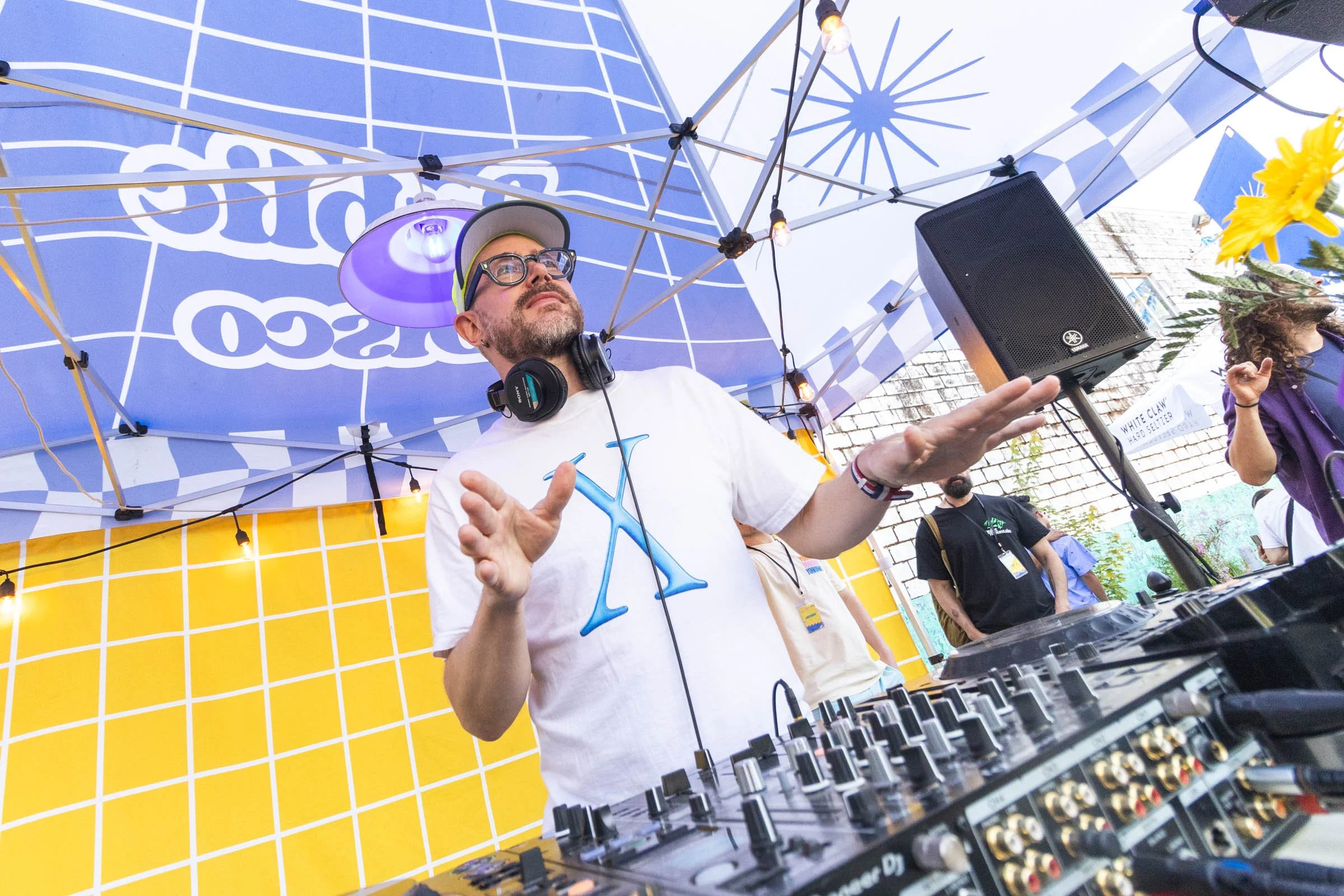
Public Disco Pride Block Party 2025 (Photo: Alison Boulier)
I performed at last year's Public Disco Pride Block Party and felt immediately in tune with what they're building. A genuine commitment to activating the city and bringing artists in at the highest level. This year, as I mentioned, I've been brought in to co-curate the event with DJ Dood (Elsa Sianas). That's meant dreaming up a wishlist of artists we'd love to bring to Vancouver, then spending weeks working out availability and cost against our budget. Elsa kept us on track and made it an inclusive, fun experience.
I'm especially proud of how much vinyl will be played this year. You don't see this at many queer events and I think it's going to be something special for people who haven't witnessed it before. The event isn't connected to the city's official Pride festivities, but it's happening in the city, in that spirit, and for the community.
Pride to me is an invitation to remember and celebrate the history we share as 2SLGBTQI+ people in the fabric of humanity. Our trials, our triumphs, our ongoing resilience. We can't take for granted the spirit of rebellion and protest that carried us to where we are now. That spirit deserves a party worthy of it.
Finally, looking ahead, what are your ambitions for your work? How do you hope to evolve as an artist, and where do you see yourself in the long term?
I'm not trying to prove anything to anyone other than myself at this point, and that's a freeing place to be. I'm happy to be alive. I want to keep finding ways to collaborate on things that let me breathe as an artist rather than just execute as a producer. I want to keep challenging my own craft and stay genuinely curious.
The longer view is towards contribution. I've been the beneficiary of mentors and scenes and communities that handed me so much love and support and let me run wild. I'd like to do the same for others coming up. Championing rising DJs, supporting the culture we're custodians of, and staying in the room long enough to keep being useful to it.
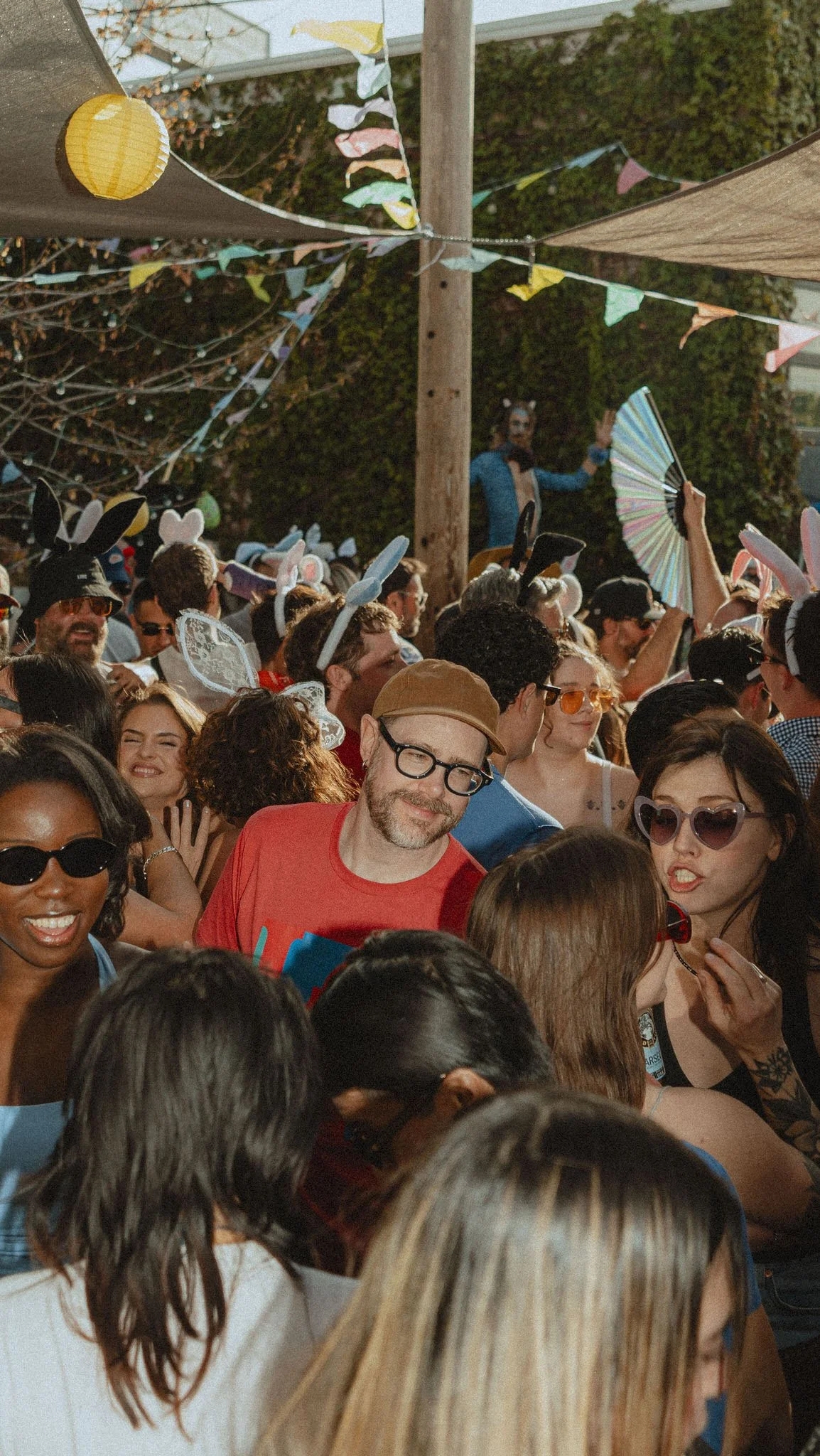
Bunny Hop 2026 (Photo: David Arellano)