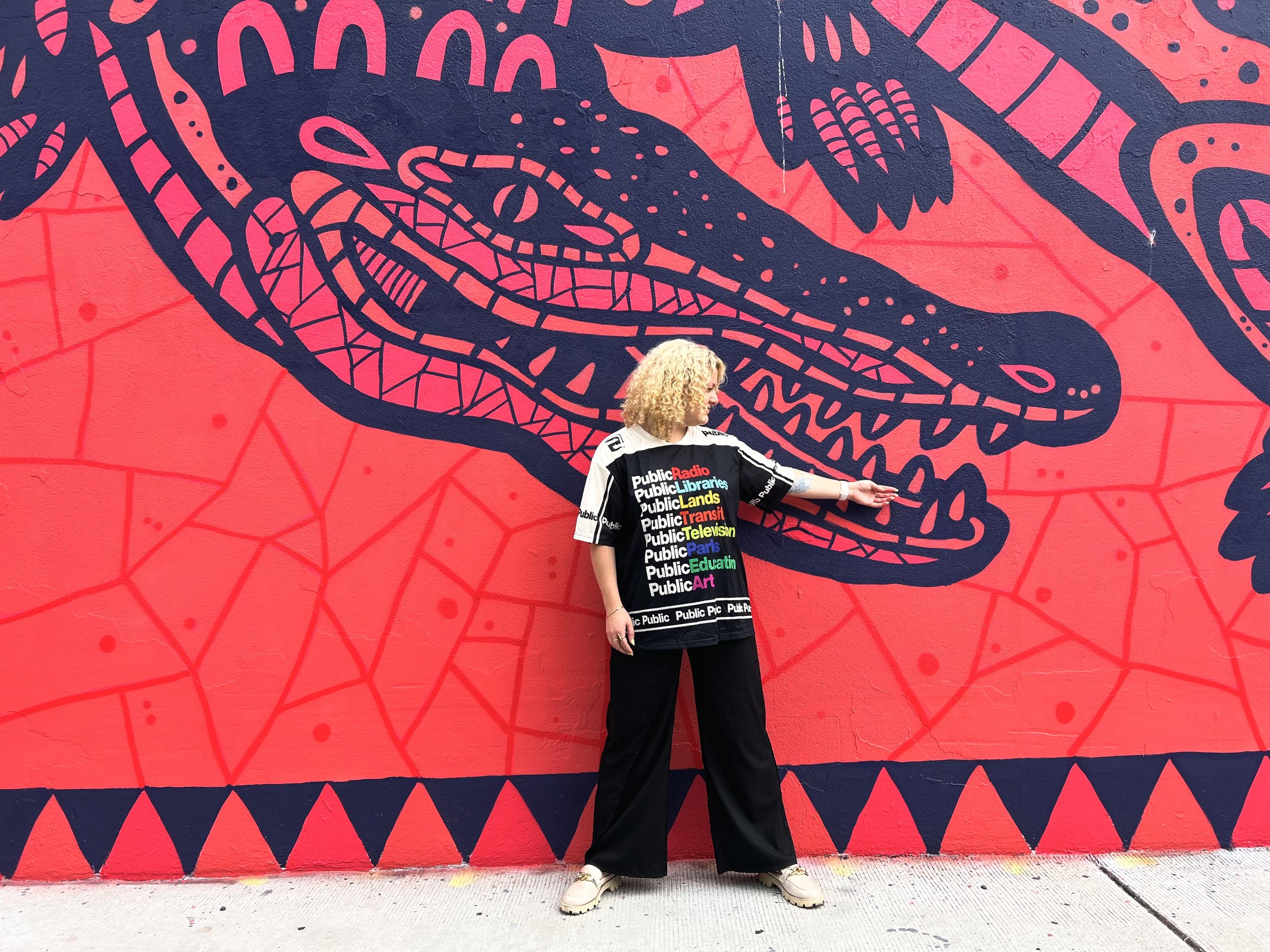
Yuliya Bruk
As part of NOW-ID’s ongoing interview series, Ne Plus Ultra - which celebrates artists and designers whose work is both inspiring and impactful - we are delighted to share the insights and creative vision of Yuliya Bruk, founder and Executive Creative Director of Future Arts, a women-led arts and technology organization creating new opportunities for technology-based artists.
Our connection with Yuliya began in 2023 through an interdisciplinary collaboration at Cornish College of the Arts that brought together dance and MFA sculpture students, faculty, and Future Arts. What began as an open-ended exploration of art, materials, and emerging technologies evolved into an extraordinary collective process that culminated in a 46-foot mural. As Yuliya reflects, the project's greatest discovery was not simply the artwork itself, but the relationships and shared language that emerged through bringing different disciplines, people, and ideas together.
Born in Smolensk, Russia, and raised in the Pacific Northwest, Yuliya holds a BFA in Digital Arts & Experimental Media and has built a career spanning visual storytelling, interactive experiences, and creative direction. Through Future Arts, she continues to champion a more equitable creative future, advocating for artists as essential voices in shaping technological innovation and cultural discourse. Her work explores the possibilities that emerge when art, technology, and human connection come together to imagine new ways to create and engage with the world.
TELL US A LITTLE BIT ABOUT YOUR BACKGROUND. WHERE DID YOU GROW UP, WHEN DID YOU BECOME INTERESTED IN ART-MAKING, AND WHAT EVENTUALLY DREW YOU TO WORKING WITH TECHNOLOGY?
It all began in a tiny Soviet bathroom where my parents and I would develop the film and watch our lives appear through chemical reactions. My dad would bring home different types of camera equipment, both photo and video and I was fascinated with storytelling, always wanting to look through various lenses. I explored all forms of creativity at a young age, painting snow sculptures, interactive watercolors, ballet, various rubix brain puzzles, and one of my favorite activities - staging acrobatic clowning performances for friends.
As I continued to discover what art-making can mean, and how technology fits within it, the first “new media artwork” I (unknowingly) encountered was photographing DNA for genetic research at Fred Hutchinson Cancer Research Center, as a high school intern. I spent hours "pipetting" formulas that would chemically dye parts of the chromosomal structures we were studying with fluorescent colors, highlighting the differences and making data visualizations. I found this fascinating because I was working on something that could potentially help people at the most foundational level understand the diseases they were grappling with. It was a beautiful process, spending hundreds of hours staring into a microscope, taking pictures of our blueprints. These abstract collections of fluorescent forms danced on round petri dishes, begging to be understood.
My interests at the intersection of arts, science, and technology, landed me at a Digital Arts and Experimental Media (DXArts) at the UW, where I officially learned about new media artworks and what impact they can have in the world. From then on, I doubled down in the physicality, the chemistry, the colors, and the humor of it all; weaving together community building, cultural, human, nature-based practices to create many spaces and projects, building organizations rooted in these practices.
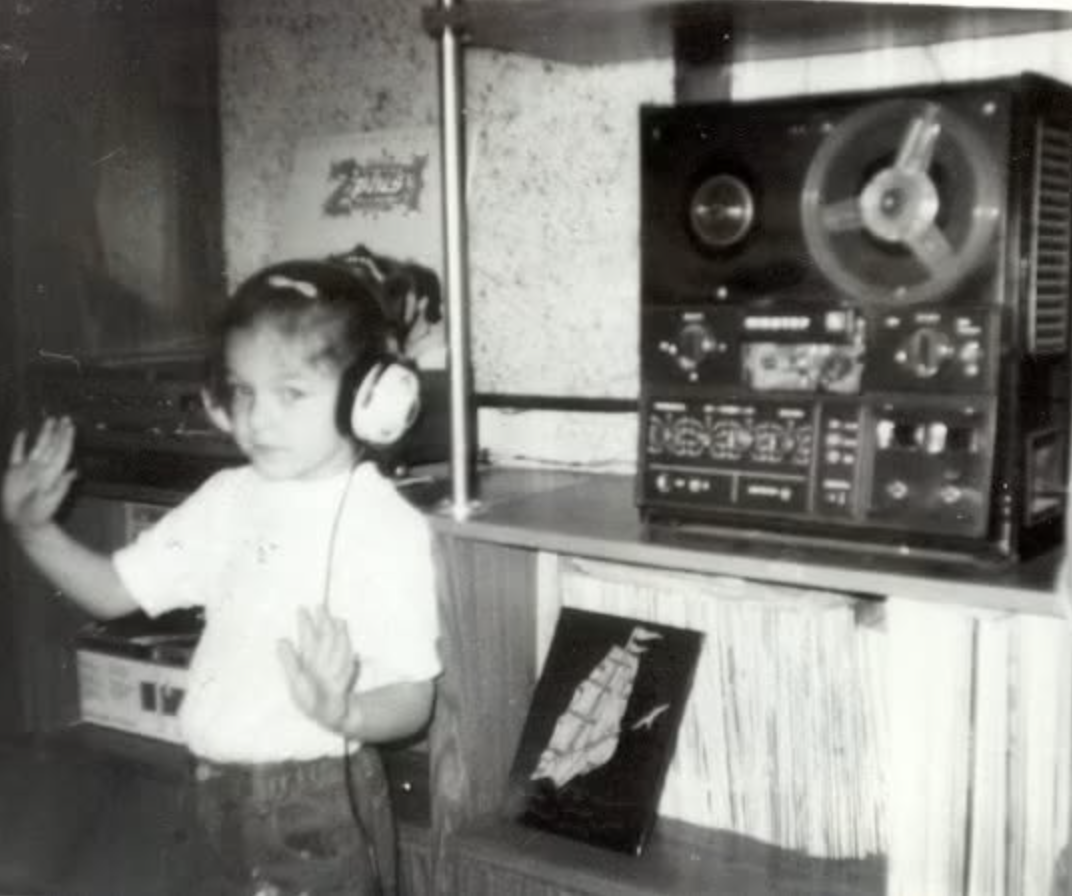
Yuliya in the Soviet Union.
YOU FOUNDED THE NONPROFIT FUTURE ARTS FIVE YEARS AGO. WHAT IS THE STORY BEHIND FUTURE ARTS? WHAT WAS HAPPENING IN SEATTLE THAT MADE YOU FEEL THIS ORGANIZATION NEEDED TO EXIST?
I love to bring people together for a reason. I love to build access to tools. I love things that are strange, make you think, and bring contrasting worlds together to spark purpose and passion. I love the idea that the future can be seen as a funky, gorgeous, solarpunk sci-fi world.
After being the founder of multiple Seattle creative spaces, including a new media gallery, photo/video studios, and a multimedia nonprofit theatre, it was nearly impossible to upkeep them. As tech was blowing up, I saw friends moving away, galleries closing, and found it extremely difficult to uphold my own spaces. The last straw was 619 shutting down in 2014, a staple in the Seattle arts community, housing a large number of studios. The creative community was starting to feel small, the thumb of tech was starting to feel heavy. There was a lot of discouragement, but I knew I wasn’t moving, and I knew I had to do something. Putting on my anthropology hat, I decided to journey into the belly of the beast to see what was “really going on in there”. I was hired at Amazon in 2014 as a video editor. I promised myself around 5 years, as this was yet another community I needed to really get to know, and community building takes time. I also knew that building a strong foundational organization in this town would mean somehow extending a bridge from technology to art, if we wanted to not just survive, but thrive.
2020 hit, and telematic presence (aka Zoom) quickly changed our relationship to technology. Our nerves and our need for connection was exacerbated. Being almost 6 years in, it was time to begin phase next. I hired an arts researcher to go through creative economy surveys. We reviewed at least a dozen, hundreds of pages of reading, focusing on PNW and national data (note: this is before AI, so everything was done by hand). We focused on one that came out of the Office of Arts and Culture in 2019. In it, we found the data point that Seattle has the highest wage gap in the nation between arts and computer occupations. This was the key to unlock what Future Arts is trying to build at its core, as an ecosystem to lessen this gap.
These surveys had clear blueprints for what the creative community wanted and needed as actions. That, plus my knowledge of the tech scene, years of founding spaces, building programs, and always keeping one foot in the new media space, naturally flowed into the beginning of Future Arts.
My goal was long term and foundational - asking the question “how can technology reflect who we are, not define who we are?”. The answer was clear: creativity, art. This wasn’t just about creating accessible public art here and there, which of course is a wonderful thing, but an opportunity to fill the gaps of permission and education between the arts and tech spaces. Seattle was flooded with tech transplants who were earning on the higher end of the wage gap and wanting to connect with the creative community, without clear inroads. I noticed the tech scene does not always feel welcome in art spaces. Thus, with my wonderful co-founders, Anna Czoski and Laara Garcia, and many other community-stewarded conversations, we began to dream up and build a myriad of pilot programs that would test and learn how we can bring these communities together.
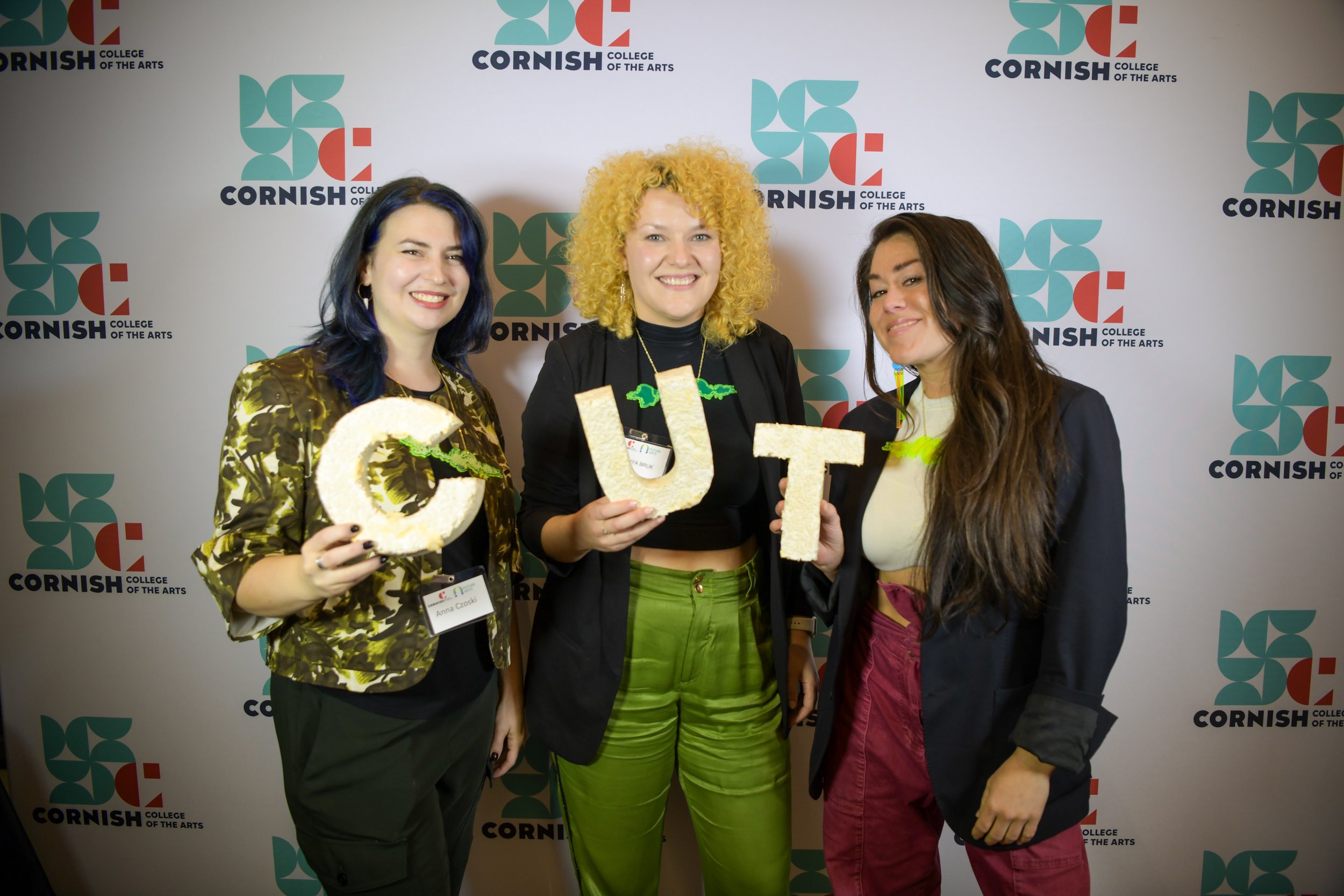
Anna Czoski, Yuliya Bruk and Laara Garcia.
I LOVE THAT FUTURE ARTS IS A FEMALE-LED ORGANIZATION WORKING AT THE INTERSECTION OF ART AND TECHNOLOGY. WAS THAT IMPORTANT TO YOU, AND IF SO, WHY?
Yes, thank you for this question. I grew up being a tomboy and fairly often one of the only female-presenting people in the rooms I was working in (corporate, filmmaking, production). It didn't quite bother me until I entered tech. Spending almost 8 years at Amazon made me really understand how different environments can feel with more female-predominant, diverse leadership spread across different expertises across industries. I even got in trouble at Amazon by often going to various teams to try to understand what each one was doing and bring us all together.
The women that I started Future Arts with all had such a nourishing way about how we talked about creating safe spaces, especially in a predominantly male and white technology landscape, and the possibilities of inventing new bridges (hint hint: food helps!). While we're not exclusively female and non-binary-led, our goal is having at least 80% of our leadership female or non-binary-presenting.
Future Arts also has a deep focus on building a truly diverse team that leans into the biomimicry principles of nature. We often say that Nature is Queen, the ultimate creator and matriarch, and looking to her principles to build a strong foundation has made this organization incredibly different. I think a huge reason for that is being women-led, and the safety and fluid qualities that have not only built unique projects and program pilots, but the daily functions of the organization. This foundation permeates into the community we have been building and hope to continue expanding.
THE NAME FUTURE ARTS IS WONDERFULLY OPEN-ENDED. WHAT DOES "FUTURE" MEAN TO YOU IN THIS CONTEXT? ARE YOU TRYING TO PREDICT, IMAGINE, BUILD, OR SOMETHING ELSE ENTIRELY?
It shocked me that a simple and loaded name like Future Arts wasn’t yet taken by any organization. It felt expansive and always relevant.
We talk about Future Arts supporting what is best known today as "new media" artworks. But we didn't want to put guardrails around that term, so we came up with something similar that is more community- and culturally focused, and more accessible.
As we've sunk into our name over the years, we've realized that the future of arts can mean many different things. Yes, we have a grounding in technology, but the heart of what we've been building is grounded in various cultural futurisms, nature-based futurisms, and, more broadly, the idea of a solarpunk society where technology serves a purpose. Future Arts centers ancestral, sustainable practices that make the idea of a better future feel real.
In this day and age, that means bringing technology to the center of a practice and reimagining it "for good." When the tools of technology are paired with these elements and goals (and not capitalism), the possibilities for reimagining can be truly limitless.
We've worked with artists who use all kinds of mediums, not just technological ones. The one requirement is a questioning of what kinds of futures can be built that center the human and the earth, not the machine.
HAS YOUR RELATIONSHIP WITH SEATTLE CHANGED THROUGH YOUR WORK WITH FUTURE ARTS?
My family immigrated here, so Seattle is not my birthplace, but it certainly is my home, one I feel a kinship with and a caretaking role for.
I could say without a doubt that the work with Future Arts has completely shifted how I engage not only with my community, but with the land itself. This is especially true of the recent project working with folks from 9 different Coast Salish tribes, as well as historians, literally learning the history of the land and having the privilege of doing so in community.
Because Future Arts really leans into community-based practice such as this, not having a home base during those years has allowed us to work with a myriad of different institutions, at this point probably over 40. In doing so, we get to reimagine and experience different placemaking opportunities that have literally changed the way I personally engage with Seattle as a physical space, my home.
Getting to know a community or a location deeply has felt like solidifying new taproots within the city. Because we're not bound to an office, walking through Seattle now, I have deep memories of the artists I've worked with at various locations, the coffee shops where we've met, and the project pop-ups and community events we've hosted. Not that we won't be, but for now, being able to embrace working at various studios with various community partners has absolutely changed my perspective on what community can mean, and what a city can really hold and continue to uncover underneath its cemented, colonial barriers.
I hope this also resonates with those who have encountered our programs, no matter where they are coming from.
FUTURE ARTS SEEMS TO EXIST IN THE SPACE BETWEEN DISCIPLINES, IDEAS, AND PEOPLE. WHAT HAPPENS FOR YOU WHEN THOSE BOUNDARIES BEGIN TO DISSOLVE?
When boundaries begin to dissolve, new root forms emerge. Frankly, I think we have lost touch with the root of what the word “innovation” means; it's become a buzzword. If we really think about what feeling the word innovation is looking for at its core, I believe it’s trying to grasp a perspective shift across disciplines. The connections of various forms and the strength and courage to go there, to let the idea, the feeling, the root of a project be its leader, and the stewards around it be truly collaborative across disciplines, across communities, and even across time, working from ancestral knowledge to futuristic solarpunk ideas. It's very rare to work in an environment like this, and it's been really refreshing to offer this kind of space, openness, building blocks, and discovery to each of the 25+ projects we have built.
WHAT KINDS OF ARTISTS AND THINKERS ARE YOU DRAWN TO? IS THERE SOMETHING YOU RECOGNIZE IN A PERSON OR AN IDEA THAT MAKES YOU WANT TO BRING THEM INTO THE FUTURE ARTS ORBIT?
I attend a lot of events in the arts and tech communities, but I'm also drawn to folks who delve into niche interests. Whether it's nature or deep scientific study, or cultural storytelling and practices within immigrant and Indigenous communities. Spaces like those hold the raw elements that are the building blocks of both purpose and curiosity that people are holding on tightly to preserve.
Curiosity is one of our biggest values at Future Arts. It shapes how our team works and communicates together, the work we support, and how we build our programs. So what I truly look for as a curator is a non-complacency with the world. Wanting more, looking with the third eye, practicing something for those 1,000 hours because you cannot do without it. When people come together from that root of curiosity and commitment to depth, we can build a successful, future-forward project.
I also look for people who are self-motivated. Bringing your spark is what ignites the team. We hold each other accountable, and that's where the feeling of "hell yes" comes in. It can be a struggle to say no, but on our team we talk about saying no more, because it opens the path to that "hell yes" feeling of trusting the process. When a project, an idea, or a grant we're applying for is truly gelling, there's a palpable giddiness to it.
Most importantly, I look for how care emerges from such curiosity and self-motivation. Not only care for yourself or for someone else, but what community care looks like. Building community care in the future is our ultimate goal.
When the ingredients center curiosity, self-motivation, depth, and community care, the soil of a project feels fertile for many types of fruit. I've watched around 100 volunteers, the students we've supported, the artists we've worked with, and the community members who have experienced our projects begin to open up in new ways in our spaces. Our projects encourage digging deep, so the viewer can be offered many opportunities for questioning and meditating, a nesting doll of gifts. This future can build a new type of permission to rekindle awe outside of flat screens.
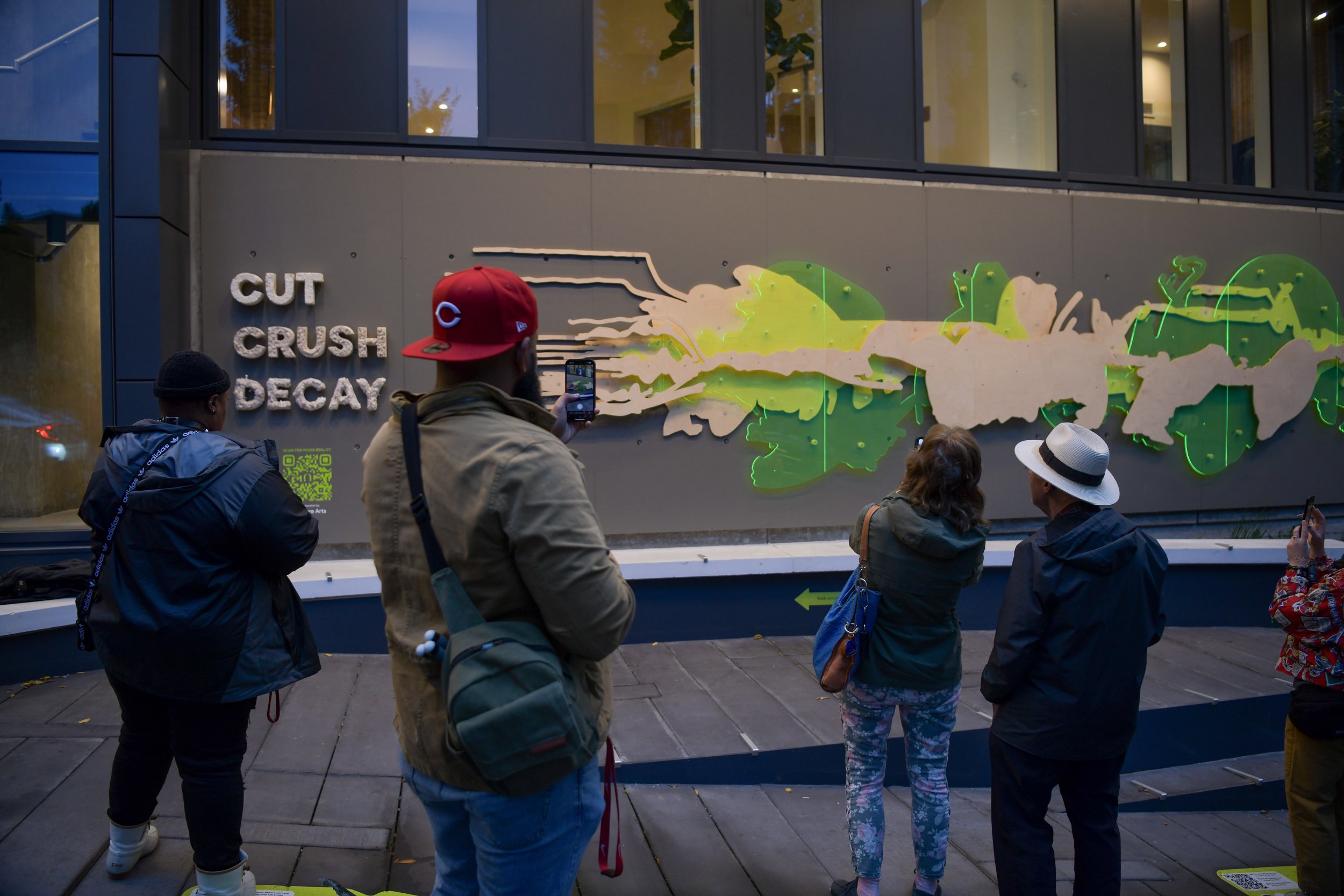
Cornish Mural. Photo by Winifred Westergard.
CAN YOU TELL US ABOUT A PROJECT OR ENCOUNTER THAT SURPRISED YOU - SOMETHING THAT BECAME VERY DIFFERENT FROM WHAT YOU INITIALLY IMAGINED?
To this day, the project with students at Cornish College of the Arts still gives me a chuckle, because we had zero clue what we were walking into. This was a completely new experience in every single way. From working with an institution and students in a classroom setting, to the interdisciplinary dance and sculpture spaces intersecting, and bringing external technology artists and technologies to glue it all together.
There was a moment when we watched the students bring in objects, and they felt so random. We had no idea what we were going to do with crushed cans, scissors, and a sculpture of meat, or how to connect them into a story. As the space for creativity and art allowed, and as we worked together, we dove into the process, and it became a lot more than just objects or meanings. It became a way of relating to each other and to technology, and the literal building blocks of relationships. Often, that is where the art actually gets discovered; where is born; how it grows into something worth showing to others to derive their own meaning. To me, that was the most thrilling part: supporting the creation of a form that allowed pieces of this world to find their own neighborhood. We not only used things like growing literal mycelium sculptures to bring these items together, but built a language between students, teachers, faculty, community members, physical supplies, and manufacturers to create a giant 46-foot mural, focusing the story of process into an interactive, augmented reality interaction and an 18-minute documentary.
IS THERE A FUTURE ARTS PROJECT THAT FEELS PARTICULARLY PERSONAL TO YOU?
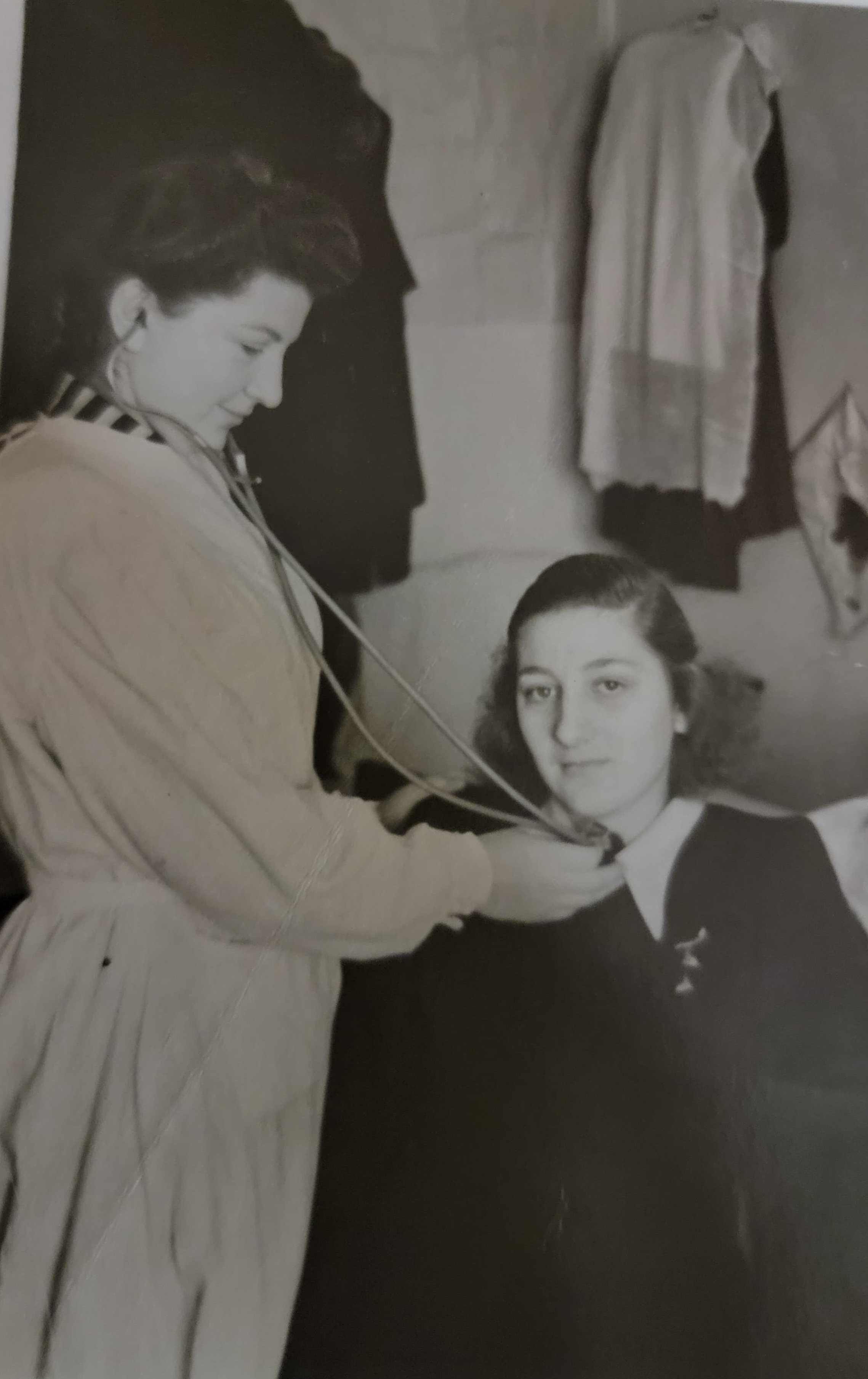
Yuliya’s grandmother, Mariya Zakashanskaya.
Each project we've created over the years has a piece of me in it. But the most personal one would be Augment Seattle in 2022, our pilot showcase before the World Cup project we just finished for Future Arts Way. It was our first large-scale public artwork, and it was happening while my grandmother was passing. There was such an interesting balance happening for me as we developed the showcase. My life became about visiting my grandmother, and working on the showcase. As we were nearing the opening, I checked her into hospice. Right after we launched, she passed. Those six months felt almost like a transfer of ancestral energy.
My grandmother was one of the only female and Jewish surgeons in Soviet Russia at the time. That moment gave me a lot of strength and guidance that I was on the right path. There was something so powerful in creating larger spaces and opening it to others who historically have not had a voice, or the opportunity to tell stories in a big way. Augment Seattle, and Future Arts Way, are projects that use Augmented Reality to take over entire neighborhoods, using technology to produce massive site-specific “digital” artworks that would otherwise cost absurd amounts to fabricate. It’s magical.
HOW IMPORTANT IS UNCERTAINTY TO YOUR PROCESS? DO YOU NEED TO KNOW WHERE SOMETHING IS GOING BEFORE YOU BEGIN?
If everything were certain, it wouldn't be new (and exciting!). Uncertainty is an important ingredient, and with a name like Future Arts, it usually makes its way into the brief. If it doesn't, I will push it there, or I will push you to push it there, to ask those difficult questions: why a medium or an idea is the proper one to use, how it connects back to our mission, and how we can reinvent this process, even in a small way, not only to make the world better, but to allow us to think deeper and to care about each other in a more reciprocal way.
What's unique about Future Arts and the uncertainty of it all is that we push ourselves to test and learn, and to reinvent often. In doing so, we've been able to work across so many different communities in so many different ways: from short-term volunteer projects and youth programs to large-scale public art installations, including one that welcomed the mayor to try augmented reality for the first time, and one of the largest augmented reality experiences ever launched, spanning 4 neighborhoods during the World Cup. If we had worked within a framework of certainty, none of those things could have come to fruition, because they started as things that felt impossible.
WHAT DOES COLLABORATION MEAN TO YOU? AND WHAT MAKES A COLLABORATION GENUINELY TRANSFORMATIVE RATHER THAN SIMPLY COLLABORATIVE?
Collaboration is the heart of what we do, and it is something we're continuing to learn. What's beautiful is that every collaboration is unique to itself and its needs, to its time and place in the world, and to the needs of the humans in the room, the ones we feel we need to bring into the room, and the ones missing from it. Starting there, looking at those ingredients on a personal level and allowing that kind of energy into the room is the beginning of something transformative, because ultimately, we're looking to be transformed through the process.
One of the biggest values we come back to is that process is product. Process means the relationships we build, the respect we give each other, the openness we have, and the boundaries we set with each project that allow us to move through safely, truly collaborate, and support each other. That means not just saying we collaborate, or smiling and nodding at good ideas, but actually questioning those ideas. Encouraging questioning, encouraging saying no, and returning to curiosity builds character in how we all grow as collaborators.
Lastly, for me, true collaboration means leaning into your own expertise as a valuable offering, and treating others with the same respect and trust you would want them to provide for you. With this reciprocity, a strong web between experts is woven, with engaging communication, supportive accountability, and the knowledge that everyone is stewarding this work together from a good place they could not otherwise build on their own.
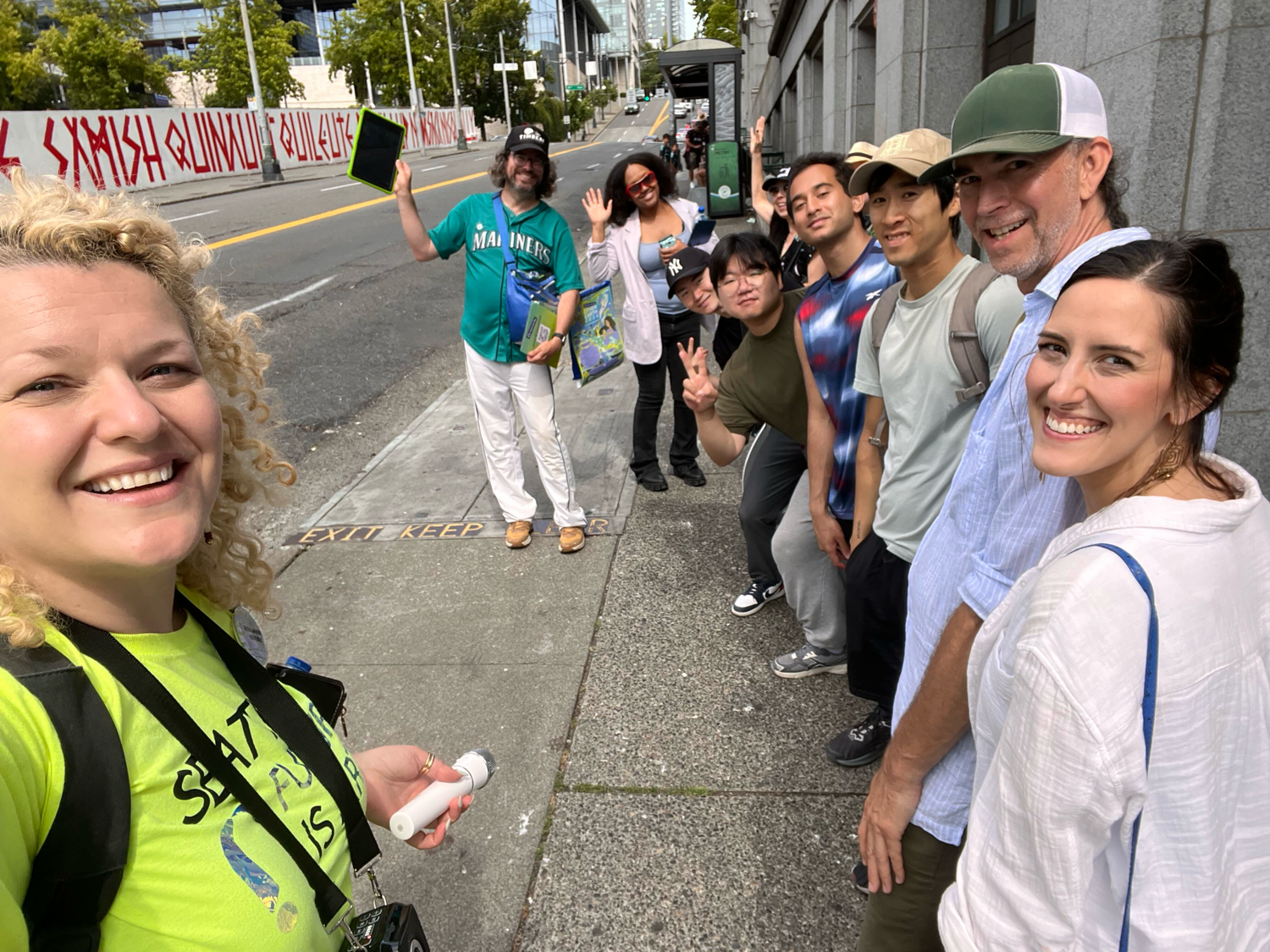
Future Arts Way AR Tour 2026
WHERE DO YOU LOOK FOR INSPIRATION OUTSIDE OF THE ARTS? ARE THERE PLACES, TECHNOLOGIES, SOCIAL MOVEMENTS, CONVERSATIONS, OR EVERYDAY EXPERIENCES THAT ARE INFORMING HOW YOU THINK ABOUT THE FUTURE?
I mentioned in an earlier answer that I love going to very niche or bio-inspired talks, like at Seattle’s Town Hall. Within depth and research is wisdom and inspiration. At any given moment, I will be in the middle of 3-5 books. When I make time for fiction or films, I love magical realism, solarpunk themes, anything with robots, auto/biographies of badass women, and non-fiction psychology and science-y books. Perusing data visualizations of data sets, especially ones that have to do with anthropological historical patterns, phenomena as part of our bodies, or really anything nature-related. Like – birdsong visualizations.
I love sharing a strong cup of chai on a Sunday morning with someone whom I met at one of our events, to learn more about who they are. Or various other leaders of communities or organizations I respect or would like to learn from/about. Life stories and diasporic studies bring me grounding.
There is nothing that grounds me more, however, than partner dancing. I have been dancing since I was 4. While it is a personal meditation for me, I also believe that social dancing can save the world. Our bodies are becoming disconnected from our minds, and when I attend weekend dance workshops and listen to how they describe movement, a tendril of connection, or a way of thinking about weight distribution, to me, this can be so directly applied to any part of life, to a successful project. Partner dancing gives us permission to be in the moment, in deep listening, and in a complete space of surrender. It allows us to understand where a boundary can sit and how to communicate it. I am on a journey to continue bringing embodied lessons gently into the undercurrent of the future I’m building both for myself and my community.
WHAT DO YOU THINK WE'RE CURRENTLY GETTING WRONG ABOUT THE FUTURE OF ART AND TECHNOLOGY? AND HOW DO YOU THINK THE TWO CAN BE IN MEANINGFUL DIALOGUE?
I'm currently working on an essay about experiential design and what makes such interactions “sticky”, versus the goal of a ticket purchase and selfie share. As we are starved for connection and purpose, the experience economy is beginning to boom, while the quality bar is stopping at fluorescent ball pit rooms.
At first, I was open to these spaces as potentially a gateway to interactive or immersive new media artworks. This was 5 years ago; now I’ve changed my mind. As generative AI creeps into these spaces, the goal is blatant Instagram bait for profit, and essentially an embodied version of doomscrolling through cheaply set up colorspace rooms with no backbones. Hire artists. Push layers into these spaces. Meow Wolf and TeamLab are great examples of how to do it right. Bubble Museum, Selfie Museum, my most recent disappointment, Mercer Labs in New York (there were 2 rooms I was intrigued by), are great canvases for pushing further.
Another obvious and terrifying idea is customizing (everything we need) through generative AI. Full stop. Terror. When will we have space to know our…needs? If there's a technology that immediately provides you with an answer to a question you haven't yet formed, the detrimental problem becomes making space for questioning itself. This is what happens when we look at clouds, touch grass, or are forced to consider our inner purpose over many struggles (See my other essay on how Rumbas are killing our productivity.)
In short, we will turn to art, because art is a rebellion and an outcry to learn how best to ask the question of who we are. And that cannot be snatched away. Artists will always be pushing through cracks in the sidewalks, connected to the original source, with no AI in hand, producing beauty, and writing imperfect, raw answers that will help us formulate our own questions better. Technology will be powering organic farming, bringing remote ultrasound to underserved areas, and cracking the DNA code to space.
Art and technology are going to be seamlessly in dialogue all around us, saving our planet, hopefully stewarded through the eyes of community needs.
IF FUTURE ARTS SUCCEEDS BEYOND YOUR WILDEST EXPECTATIONS, WHAT HAS IT CHANGED - NOT JUST FOR THE ARTISTS INVOLVED, BUT FOR SEATTLE?
This question is difficult to answer, because what would make Future Arts fully successful will remain, indefinitely, within the power of the communities it serves.
For the next decade, however, success would mean solving many of the problems listed in the creative economy surveys sourced from hundreds of artists, and in the many, many additional conversations with artists and community members at our events.
I would like Future Arts to be a pillar in changing Seattle's legacy and what it is known for globally. Part of that is seeing some of our larger-scale programs, like the Future Artists and Innovation Residency (our FAIR program), become an example of how bringing two communities together in a dignified fashion could change the fabric of how technology, the arts, and creativity work together.
Oftentimes these worlds are so separate that people working in technology never really encounter that bridge. Our example, FAIR, would put artists at the table with engineers, product designers, software developers, and more. Artists would bring community discourse and tech-based artworks into tech spaces at a ground level, showing the value of critical feedback that reflects the parts of society we want to include. In doing so, it changes how art is viewed in technology spaces; technology feels more transparent, and the people working there feel more personally invested in what art means in the future.
This, at its core, is immersive education through relationship building. If folks in tech understand the skills artists have and use daily, they will see that those skills are not dissimilar to their own. Oftentimes, they dive even deeper, have courage, and empathy, words often unwelcome in outcome-oriented, product-design, capitalistic spaces.
My greatest hope is that Seattle will embrace our large-scale public artworks, youth programs, and FAIR as programs this city is proud to steward. Out of it will bloom initiatives that dignify and reinvent the word "artist" in society, and ultimately lower the wage gap, because "Artist" will become a capital-A job in tech, with more dignified-paying tech salaries. If Seattle sets an example to hire Artists within 50% of its emerging tech companies, think of what that would tell the world today. Think, too, of what it would open up as opportunities for the youth of tomorrow. Those jobs we constantly tell them aren’t “yet invented” - these are it. Let’s invent them.
WHAT ARE SOME OF YOUR HOPES AND AMBITIONS FOR FUTURE ARTS THAT YOU HAVEN'T HAD A CHANCE TO REALIZE YET?
Future Arts has come to its crossroads, completing the 5-year plan I committed to. We have grown from a baby nonprofit, thawing impact that would constitute support reflecting a foundational organization. My hope for the nonprofit industry is to shift from a scarcity mindset to abundance. While it's nearly impossible to change an industry in a short time frame of 5 years, we have offered scalable impact within youth, underserved communities, and programs that have successfully brought together arts and technology spaces in unique and memorable ways. Perhaps we have not yet cracked the code of securing the operational support we need to function like a large-scale agency, offering full-time, or even part-time, living wage salaries, but we are certainly showing that we have the rigor, vision, and versatility in our networks and abilities.
At the moment, we are building a strong board with a collaborative approach and advisory committees. We are reworking our Impact Report and our 3-10 year strategic plan. An exciting little sneak peek into a larger 10+ year plan is the hope of building a new media arts center that houses our programs more permanently and changes the literal landscape of Seattle by building a new landmark within its skyline. We want to bring Seattle into a global example of how arts and technology can get along to shift culture, to shift what Artist means in our society, to shift the Future term of Artist into a dignified, living-wage, very important occupation. Artists now have a completely different responsibility and weight ahead of them: to reflect an ever-changing society ruled by the ominous cloud of AI.